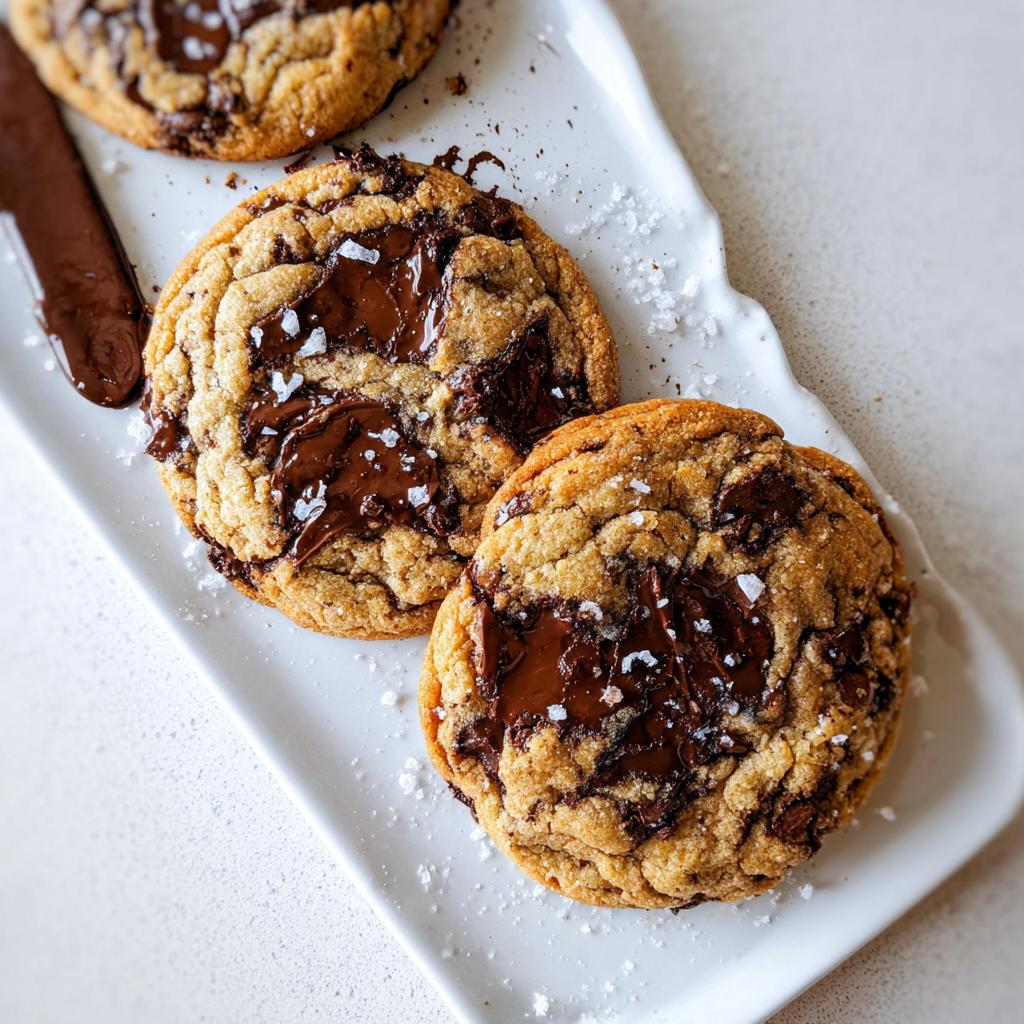
Ingredients
Equipment
Method
- Preheat your oven to 350°F / 180°C. Line two sheet pans with parchment paper.
- Place the butter in a medium saucepan over medium heat. Cook until the butter melts, then continue cooking, swirling the pan often and stirring with a whisk, until the butter foams, turns golden brown, and smells nutty. This takes about 3-4 minutes.
- Weigh out 110g of the brown butter into a medium bowl and let it cool for 15-20 minutes so it does not scramble your eggs.
- Add the brown sugar and granulated sugar to the bowl with the brown butter and mix to combine.
- Add the egg and whisk well for 1-2 minutes, or use an electric mixer, until the mixture lightens in color and thickens.
- Add the vanilla and mix well.
- Add the flour, baking powder, baking soda, and salt. Mix with a rubber spatula until some flour streaks remain. This prevents overworking the dough.
- Add the chopped chocolate and mix to incorporate using a rubber spatula.
- Scoop 6 cookies (about 55g per dough ball) using a 2 Tbsp cookie scoop onto the prepared baking sheet. If you want, flatten each ball, press more chocolate pieces on top, and roll it back into a ball. Arrange the dough evenly apart on the pan. Cover the remaining batter lightly with plastic wrap.
- Bake the cookies for 11-13 minutes, until the edges are set. Bake longer if you prefer crispier cookies. Remove the pan from the oven and briefly bang it on the counter to help deflate the cookies.
- If you want perfectly round cookies, use a cookie cutter slightly larger than the cookie to shape them. Sprinkle the tops of the cookies with flaky sea salt. Allow them to cool on the pan for 10 minutes, then move them to a wire rack to cool completely.
- Repeat the baking process with the rest of the batter. Store cookies in an airtight container at room temperature for up to 3 days.
Notes
You will see two quantities of butter in the recipe: the initial amount, and the measured amount of brown butter used in the method. The larger initial quantity accounts for water loss during browning. Different butters have different moisture levels, which affects the brown butter yield. European or New Zealand style butter, which is higher in fat, will yield more brown butter than American style butter.