Ingredients
Equipment
Method
- Allocate sufficient time. For a first attempt, plan for 20 to 30 minutes to mix the dough, followed by at least 30 minutes for resting.
- Prepare your pasta dough using a reliable recipe. An egg-based dough is a good starting point.
- Decide on your rolling method. You can use a rolling pin, but a roller or press aids in achieving an even thickness.
- If using a machine like the KitchenAid press, practice getting into a rhythm. You need to learn when to slice the extruded shapes away from the machine.
- Roll the dough into sheets. If using a manual roller like the Imperia, you can cut these sheets by hand for shapes like lasagna or pappardelle.
- If using attachments for shapes like spaghetti or bucatini, feed the sheets through the appropriate cutter attachment.
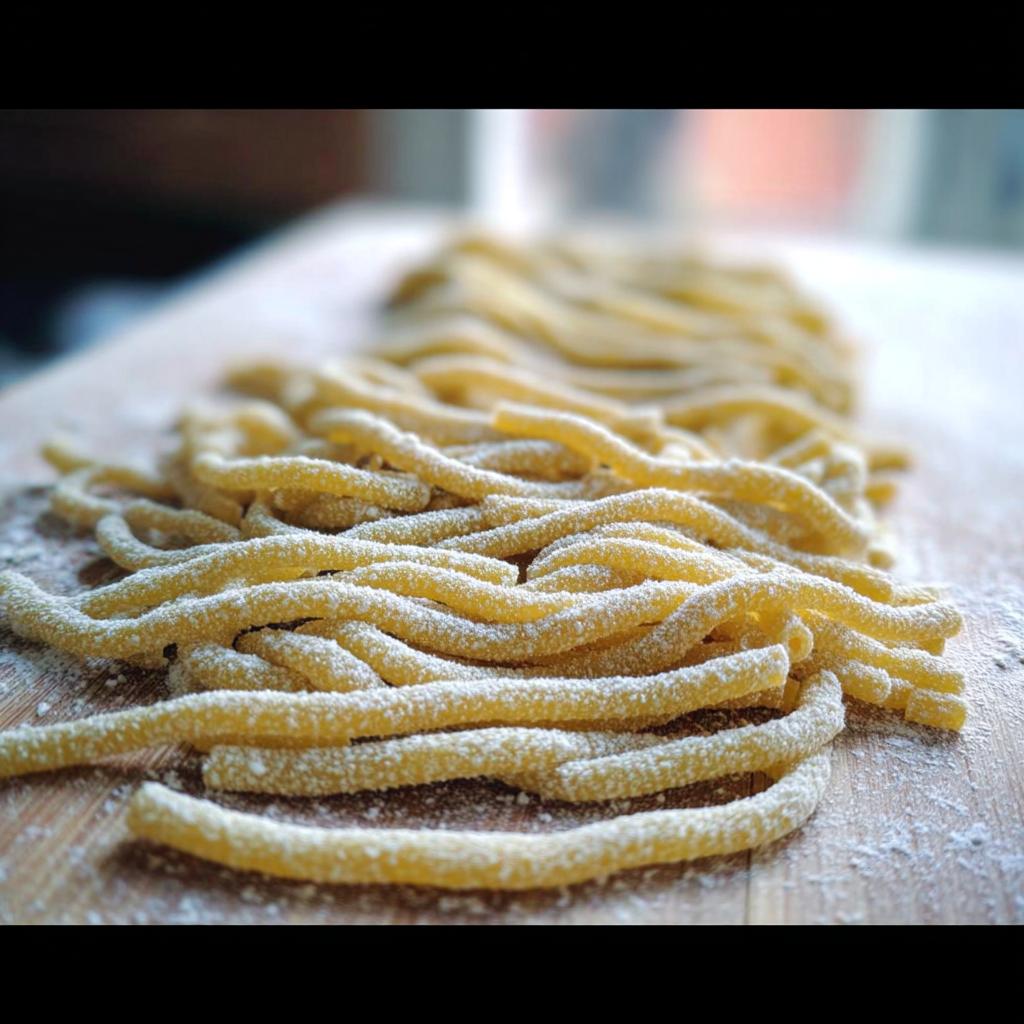
- Allow the cut pasta to dry for at least 30 minutes before cooking. You can dry it on a rack, draped over chairs, or spread out on a clean surface under towels.
- Dust the drying pasta pieces with semolina to keep them from sticking together.
Notes
Making fresh pasta requires time and practice, especially when working with extruded shapes. Mixing the dough is straightforward, but rolling and drying take patience. Having semolina on hand and a clean area for drying will help manage the sticky fresh pasta.