
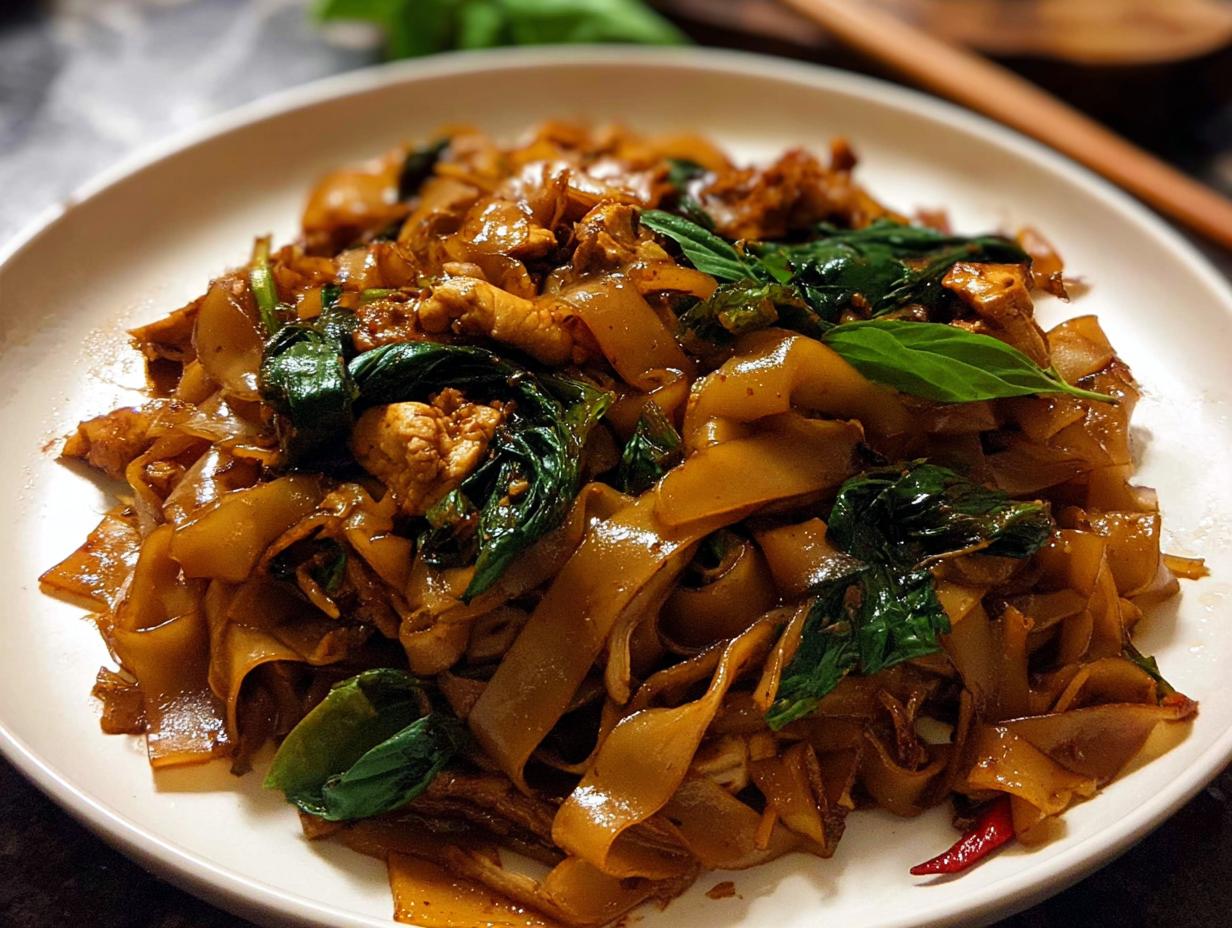
Oh my goodness, let me tell you about the flavor explosion that is *Street Style Thai Drunken Noodles*! If you’ve ever stood near a sizzling wok at a night market, you know that intoxicating mix of spice, basil, and char that you just can’t replicate easily at home. Well, I’m Elena Brown, your Gluten-Free Culinary Storyteller, and I’ve spent years chasing that exact memory in my kitchen.
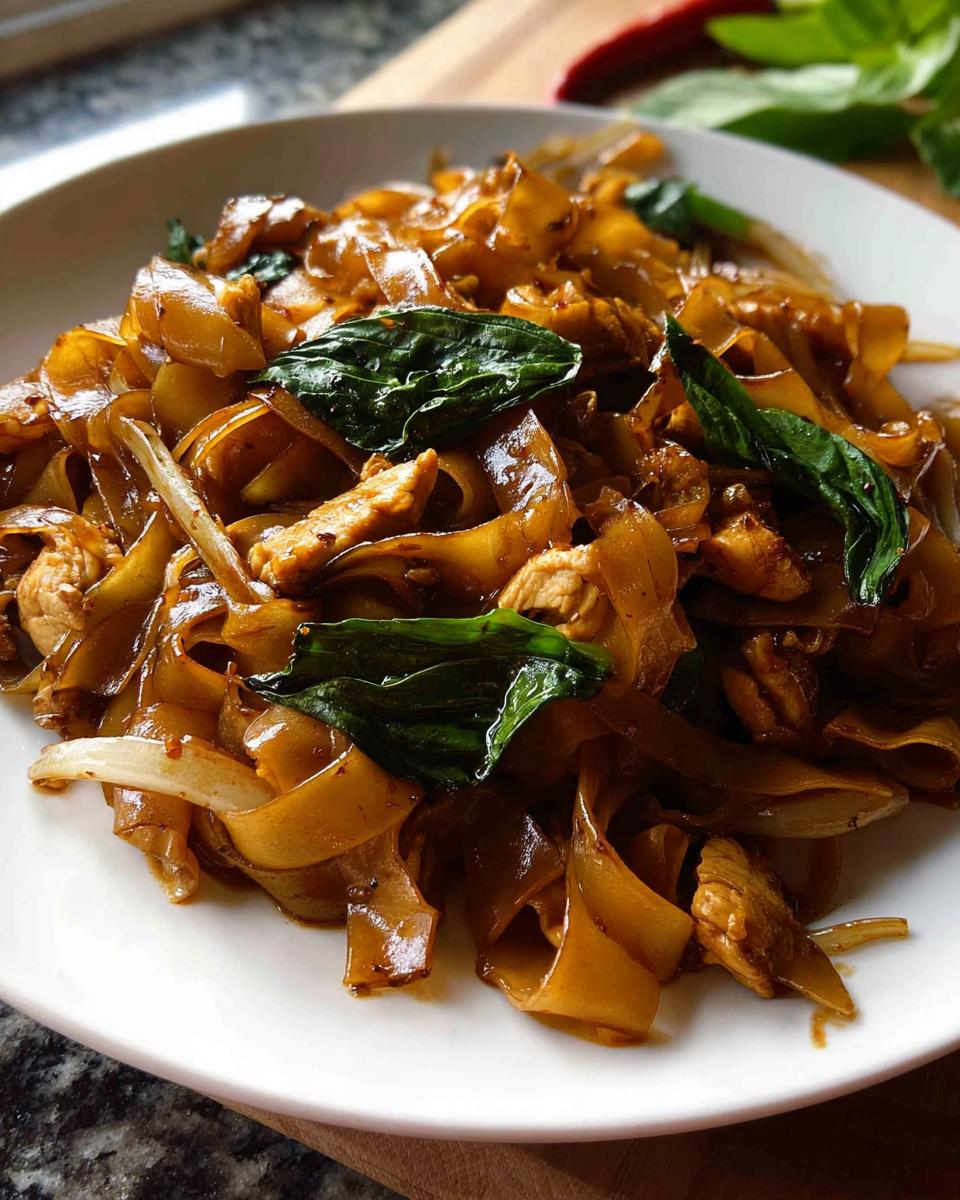
My love for Thai cuisine really hit me hard while backpacking through Thailand. One evening, the aroma from a bustling market stall was pure magic—that’s where I fell head-over-heels for Pad Kee Mao. I just knew I had to bring that powerful, vibrant energy back with me! This recipe is my adaptation of that perfect noodle dish, tweaked to be completely gluten-free without losing one single bit of that authentic fire. Get ready, because we are recreating street food perfection!
Why This Street Style Thai Drunken Noodles Recipe Works for You (E-E-A-T)
When you’re cooking Thai street food at home, speed and flavor integrity are everything. That’s why I trust this method! The beauty is that the whole cooking process, from the moment the heat hits the wok to plating these incredible noodles, takes less than 20 minutes. Seriously, it’s faster than ordering delivery!
We want that smoky char, often called *wok hei*, and we nail it by keeping the heat cranked up. Plus, since this recipe is my gluten-free take on Pad Kee Mao, you don’t have to worry about hidden wheat in your sauces, which is a huge plus for us!
- It’s lightning fast: Total time clocks in at just 16 minutes!
- It keeps tradition: We use the classic flavor base to hit that authentic taste.
- It’s safe: Everything is carefully adapted to keep this dish totally gluten-free.
My one piece of vendor wisdom? If you can possibly find Thai Holy Basil instead of the regular kind, grab it! The flavor difference is huge—it has a slight peppery, anise note that punches through the spice. You can check out some other great approaches to the method here, but remember, the basil is key to authenticity!
Essential Ingredients for Authentic Street Style Thai Drunken Noodles
Okay, let’s talk ingredients because this is where the magic—and the authenticity—really lives! You can’t rush this part; getting your supporting cast ready (that’s mise en place, friends!) ensures the high-heat cooking goes perfectly. I’ve broken everything down into three simple groups for you. Trust me, having everything measured out before that wok gets hot is the difference between a fantastic dinner and a stressful mess!
We are aiming for that intense, slightly sweet, savory, and fiery flavor profile that screams Thai street food. Don’t skip the dark soy sauce; it’s essential for that deep, beautiful street-style color! If you need some ideas for side dishes to balance out the heat, I have some great veggie sides you might love.
For the Noodles
- 7 oz /200g dried rice noodles, wide: Make sure you grab the wide ones! Prepare these exactly according to the packet directions—they need to be ready to go right into the final toss.
For the Street Style Thai Drunken Noodles Stir Fry
- 2 tbsp oil: Peanut, vegetable, or canola works great. We need something with a high smoke point.
- 3 large cloves of garlic: Must be minced finely. This starts the aromatic base!
- 2 birds eye chilli or Thai chillies: Deseeded and very finely chopped—handle these babies with care!
- 1/2 onion: Sliced up.
- 7oz/200g chicken thighs: Cut into nice bite-size pieces. I prefer thighs because they stay juicy under high heat.
- 2 tsp fish sauce: This adds that crucial layer of salty funk.
- 2 green onions: Cut into about 2-inch rough pieces.
- 1 cup Thai or Thai Holy Basil leaves: This is non-negotiable for true Pad Kee Mao flavor! If you must substitute with regular basil, it’s okay—just use lots of it.
For the Bold Sauce Mixture
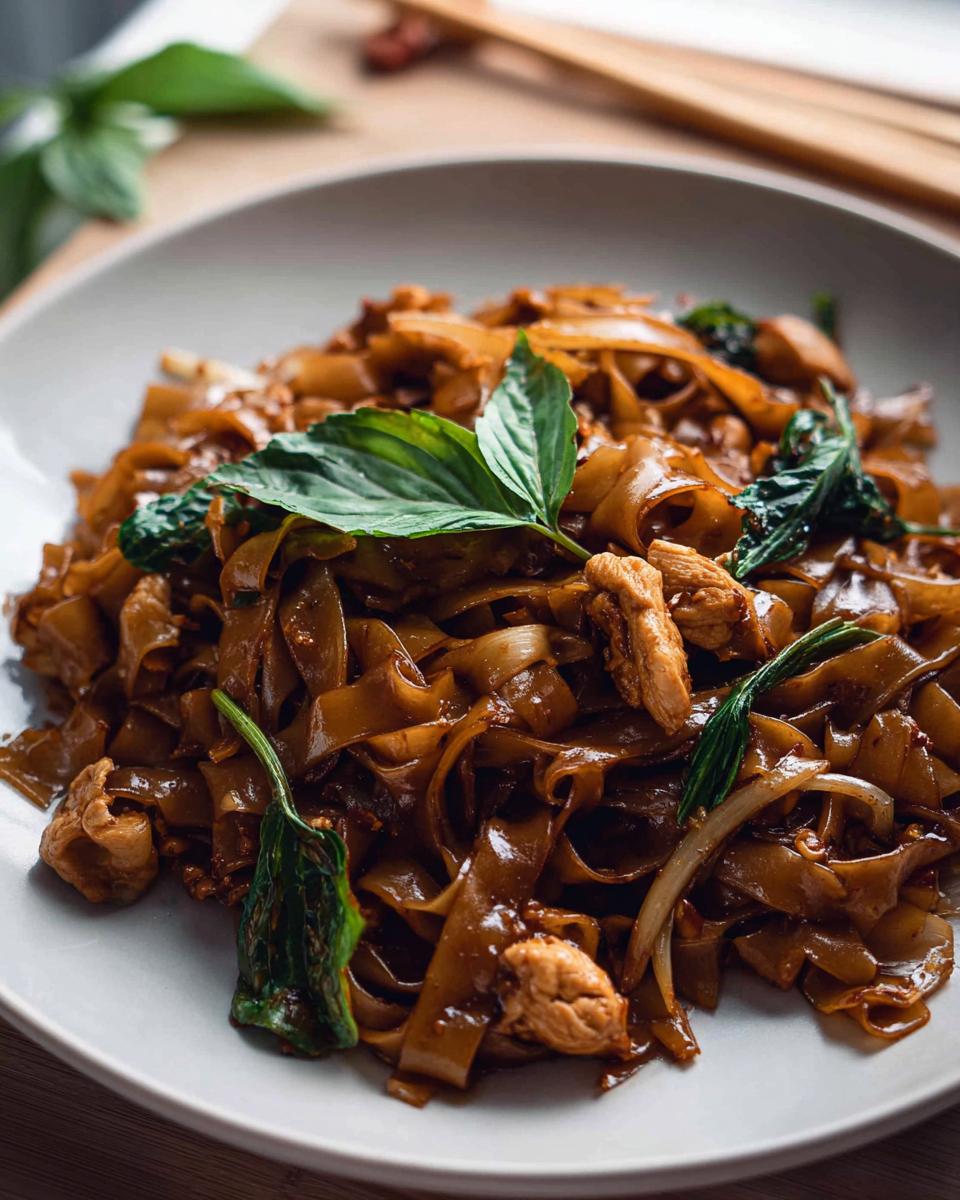
Mix these first! Don’t just drizzle components in later; we need a uniform sauce coating the noodles perfectly when the time comes.
- 3 tbsp oyster sauce
- 1 1/2 tbsp light soy sauce
- 1 1/2 tbsp dark soy sauce: This gives it that gorgeous, dark restaurant color!
- 2 tsp sugar
- 1 tbsp water
Step-by-Step Instructions to Master Street Style Thai Drunken Noodles
This is it—showtime! Remember what I said about mise en place? It’s absolutely vital here because once you fire up that wok, things move *fast*. We are aiming for high heat, quick action, and smoky flavor. I once tried doing this on medium heat because I was nervous, and honestly, the noodles ended up steaming instead of searing. Never again! Keep that heat high, and remember, you can always check out my guide on how to cook chicken like a pro here if you’re feeling unsure about the protein.
Preparation: Noodles and Sauce Assembly
First things first: get those gorgeous wide rice noodles ready. Just follow the packet directions—typically boiling them for a few minutes until they are pliable but still have a bit of bite. Drain them well; we don’t want any extra water interfering with our stir fry!
While the noodles are soaking or cooking, grab that small bowl and whisk together every single component of your sauce mixture. Taste it! Does it have that sweet, savory, salty punch you want? If yes, set it right next to your stove, ready to pour.
The High-Heat Wok Technique for Street Style Thai Drunken Noodles
Get your wok smoking hot—I mean it, *hot*. Toss in your oil. Immediately add the minced garlic and the chopped chillies. You only cook these for about 10 seconds! If you smell burning garlic, your heat is too high, or you waited too long! Next, toss in the sliced onions and cook them for just a minute until they start to soften. Now, add your chicken pieces and that fish sauce. Stir constantly until the chicken is cooked through, which should only take about two minutes when the wok is that hot.
Finishing Touches: Combining and Wilting the Basil
Time to bring it all together! Dump in your pre-cooked noodles, the green onions, and pour over that prepared sauce we mixed earlier. Toss everything vigorously for about a minute, making sure those fiery, dark ribbons of sauce coat every single strand of noodle. The sauce will reduce slightly and stick perfectly.
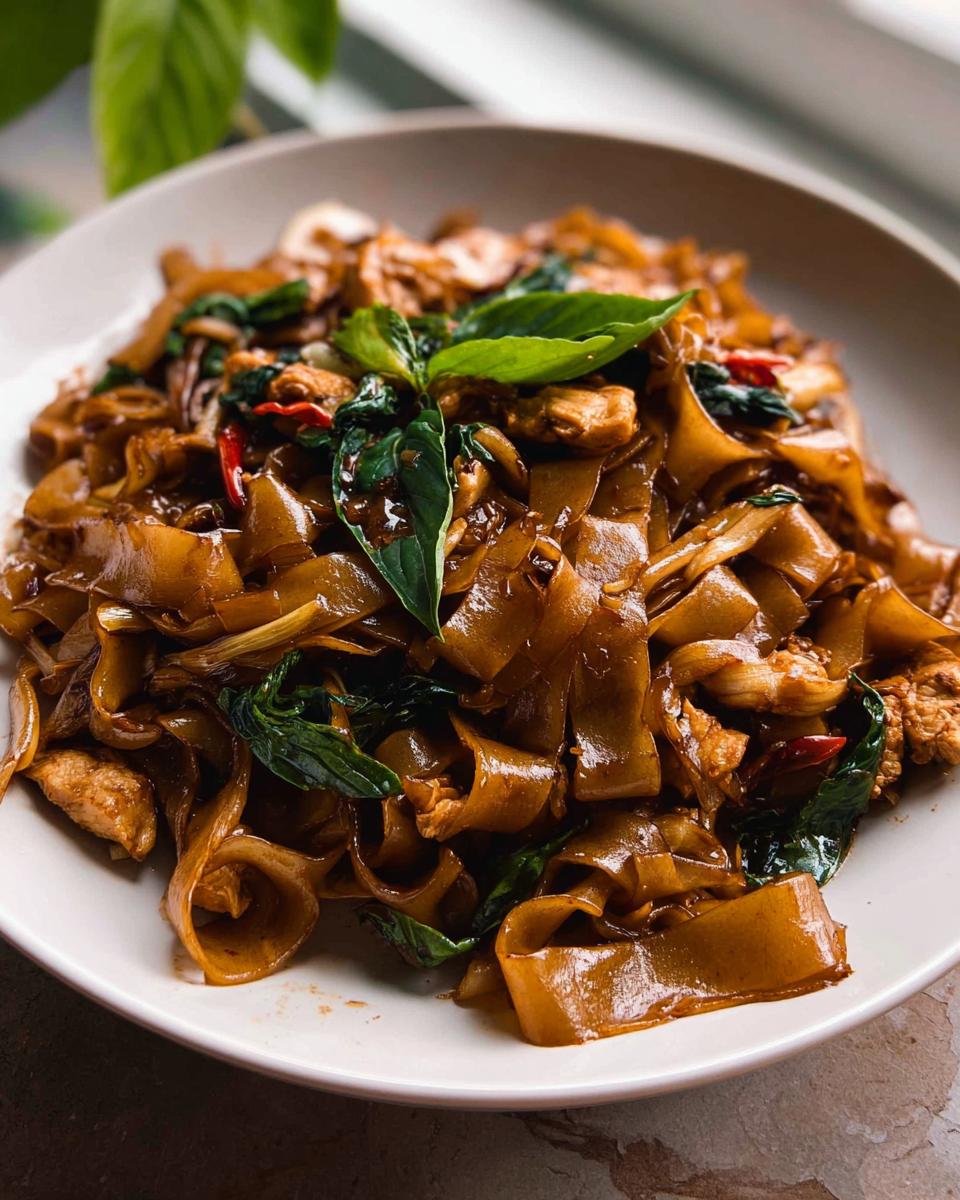
This is the final, crucial move: take the wok completely off the heat. Immediately toss in the giant handful of basil leaves. The residual heat from the noodles and the wok is enough to wilt that basil just perfectly, releasing that amazing, pungent perfume without turning it black and mushy. Serve this immediately! You want to eat pad kee mao while it’s still spitting!
Pro Tips for Perfect Street Style Thai Drunken Noodles
Listen, even a seasoned home cook like me messes up the aromatics sometimes! I remember one batch where I got distracted and let that minced garlic sizzle for maybe 20 seconds too long. Oops! It turned bitter instantly, and I almost had to start over. Lesson learned: Garlic and chilli go in, you stir *constantly* for 10 seconds, then immediately add the onion to cool things down a touch.
To manage the spice level, you have total control. If you’re nervous about the heat from the Thai chillies, use only one, or skip them entirely for your first attempt—the flavor will still be there, just less fiery! Also, a pro tip for the noodles: if they stick together after soaking, toss them with a tiny bit of oil right before they hit the wok. This prevents clumping, especially when you’re working with gluten-free rice noodles. If you’re looking for other quick meals I rely on (especially those using chicken thighs), check out my favorites!
Ingredient Notes and Gluten-Free Substitutions for Street Style Thai Drunken Noodles
Since we’re cooking gluten-free here, we have to be a little bit mindful of a few key flavor agents, especially in that sauce mix. Most people look at the list and think, “Wait, three types of soy sauce?!” I get it! But each plays a super specific role in getting that authentic street-style look and taste.
The light soy sauce is for saltiness, obviously. But the dark soy sauce? That’s 100% for color and a little bit of molasses-like sweetness. It’s what gives the noodles that deep, appealing brown hue you see in restaurants. You can’t skip that depth! If you are in a pinch and have to substitute it, try using a sweet soy sauce or adding just a tiny bit more sugar, but you’ll lose some of that visual impact.
Also, about the noodles: don’t panic if you can only find thinner rice noodles—it happens! I note that the recipe calls for wide noodles because they hold up better to the aggressive tossing in the wok. Thinner noodles are fine, but they cook faster and might break up a little more easily, so just watch them closely and pull them out of the water a bit sooner than you think seems right.
Fish sauce is fantastic, but if you are allergic or just not into it, the recipe notes suggest soy sauce as a substitute. If you do that, just make sure your soy sauce for the recipe is certified gluten-free, as many standard brands use wheat fillers! It’s often easier to just use Tamari instead of light/dark soy if you want one gluten-free replacement, although you might need to adjust the sugar a touch to compensate for the flavor change.
Serving Suggestions for Your Street Style Thai Drunken Noodles
Wow, your wok is sizzling, the basil is fragrant, and that spice is hitting just right! You’ve got this phenomenal, fiery dish ready to go, but if you’re serving this to guests (or even just for yourself!), sometimes you need just one simple side to bring it all into balance, right?
Pad Kee Mao is intense. It’s salty, it’s spicy, and it packs a punch, so we want sides that counterbalance that heat without competing with the strong basil and chili flavors. Forget heavy sides—we need something fresh and clean!
My absolute favorite way to cool things down is with a simple, crisp vegetable. A little bit of quick-pickled cucumber or radish does the trick wonderfully. If you’re looking for something really easy but packed with brightness, you absolutely have to try my Easy Cucumber Caprese Salad—even though it’s Caprese in the name, I use a light lime-vinaigrette instead of heavy balsamic, and it’s ridiculously refreshing next to spicy noodles.
Honestly, sometimes the best garnish is a simple wedge of fresh lime. A quick squeeze right over the top adds an acidic pop that brightens up the entire dish and really cuts through the richness of the sauce. It’s so simple, yet it tastes incredibly professional, like you just pulled it straight off a street cart!
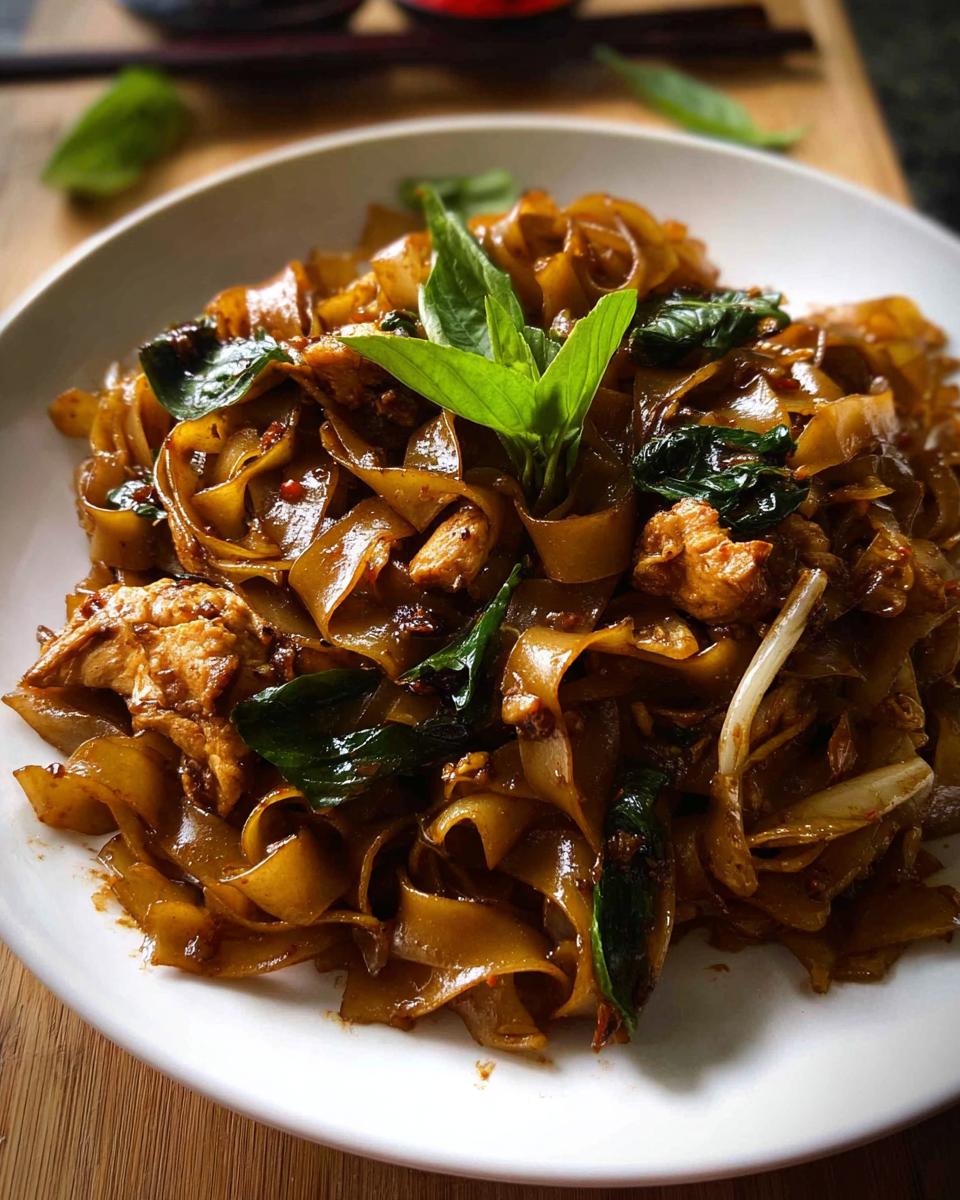
Don’t overthink it! A side of something cool, crunchy, and acidic is all you need to complement the boldness of your homemade Street Style Thai Drunken Noodles.
Storage and Reheating Street Style Thai Drunken Noodles
These noodles are absolutely best eaten fresh—that’s the spirit of street food, right? But let’s be real, sometimes we make too much! If you have leftovers of your amazing Street Style Thai Drunken Noodles, you need to handle them carefully so they don’t turn into a gummy mess.
Toss them into an airtight container right away. They are best eaten within a day or two, max. They don’t love sitting around too long!
Now, for reheating? Forget the microwave! Seriously, microwaving rice noodles is the fastest way to turn them into sad, chewy bricks. The key is high, dry heat. You want to toss them back into a screaming hot, dry wok or skillet for just a minute or two. If they seem a little dry, I splash in just a tiny bit of water and a drop of light soy sauce to bring the sauce back to life. A quick, hot toss lets them absorb that steam and revive that perfect texture we worked so hard for! You can find some of my other favorite weeknight meal prep ideas here.
Frequently Asked Questions About Street Style Thai Drunken Noodles
It’s totally normal to have questions when you’re diving into a new, bold recipe like this! I’ve gathered the ones I get asked the most. Don’t worry if you’re unsure about the heat level or the specific ingredients; we’ll sort it all out so your adventure into authentic Thai street food is smooth sailing.
How can I make these Drunken Noodles less spicy?
Oh, totally understandable! Those tiny Thai bird’s eye chillies pack a wallop! The easiest way to dial down the heat in your Street Style Thai Drunken Noodles is zero prep: just leave the seeds and white ribs out when you chop them—most of the burning heat hangs out there. For the next level of mildness, use only one chili, or swap them out entirely for a milder red jalapeño or even a colorful bell pepper if you just want the look without the fire.
Can I use a different protein instead of chicken in this Street Style Thai Drunken Noodles recipe?
Absolutely! This recipe is so flexible once you nail that sauce and heat level. Shrimp is probably the most popular alternative, but if you use it, toss it in right when you add the noodles and sauce, perhaps even a minute before, because shrimp cooks *so* fast. If you’re going vegetarian, firm or extra-firm tofu is wonderful! Just make sure you press that water out really well and maybe give the tofu a quick pan-fry either before or right after the onions to get some color on it before you proceed with the rest of the steps in the main stir fry.
Is Pad Kee Mao truly gluten-free if I use the correct sauces?
Yes, this glorious Pad Kee Mao dish can absolutely be 100% gluten-free, which is why I love adapting it! The key is vigilance in the sauce section. Since we’re using rice noodles, that base is safe. The fish sauce is naturally gluten-free, which is wonderful. For the soy sauce requirement, you must make sure you substitute the standard light and dark soy sauces with certified gluten-free alternatives. Tamari is usually the easiest swap for light soy sauce, but you’ll need to find a specifically labeled gluten-free dark soy sauce or deal with a slight color/flavor difference. As long as you verify those two sauces, you are golden!
Estimated Nutritional Snapshot for Street Style Thai Drunken Noodles
I know, I know—when you’re eating something this flavorful, you aren’t usually thinking about the numbers, but as your Gluten-Free Culinary Storyteller, I think it’s only fair to give you a peek at what’s in your delicious bowl!
This information is based on per serving, assuming the recipe makes about 2.5 servings using the chicken thighs listed. Remember, these are just estimates! If you load up on the oil, garlic, or decide to double the sauce, those numbers will shift around a bit. I’ve tried to keep things balanced, focusing on that big flavor without too much heaviness. For more inspiring ideas on keeping your meals both delicious and nutritious, you can always check out my guide to healthy meal prep!
Here’s the general breakdown for one serving of these firecracker noodles:
- Calories: Around 454 kcal
- Protein: A solid 22.9g to keep you going
- Carbohydrates: Approximately 58.6g (mostly from those wonderful rice noodles!)
- Fat: About 14.8g total fat
- Sodium: Keep an eye here—it’s around 223mg, but that can vary wildly based on your fish sauce and soy sauce brands!
It’s amazing how much flavor we pack in for under 500 calories, even with the rich sauces in play. When you make these Street Style Thai Drunken Noodles, you are getting true vibrant, authentic taste without loading up on heavy cream or tons of cheese. Just pure, fiery goodness!
Share Your Thai Street Food Adventure
Whew! We did it! You have now mastered the heat, the flavor, and the technique to create incredible, authentic-tasting Street Style Thai Drunken Noodles right in your own kitchen. Wasn’t that exciting? Chasing that street food vibe is such a rewarding experience, and I hope your kitchen smelled just as heavenly as mine did while you were cooking!
Now that you’ve conquered the wok and achieved that perfect blend of spicy, savory, and basil-forward flavor, I absolutely need to hear about it! Please come back here, leave me a quick star rating, and tell me how it went. Did you manage to find the Thai Holy Basil? Did you dare taste-test the chillies? I want all the details!
Sharing recipes is what this whole adventure is about—connecting our food stories together. If you blast a picture of your stir-fry on social media, tag me! I love seeing how you bring these recipes from my kitchen to yours. It truly makes my day as your Gluten-Free Culinary Storyteller. Speaking of which, you can always learn more about my journey with gluten-free cooking right here on the site!
I’m always cooking up new ways to bring bold international flavors into the home kitchen safely. So, let me ask you this: If you could teleport your wok to any street food market in the world right now, where would you go, and what dish would you try to recreate? Tell me in the comments below!
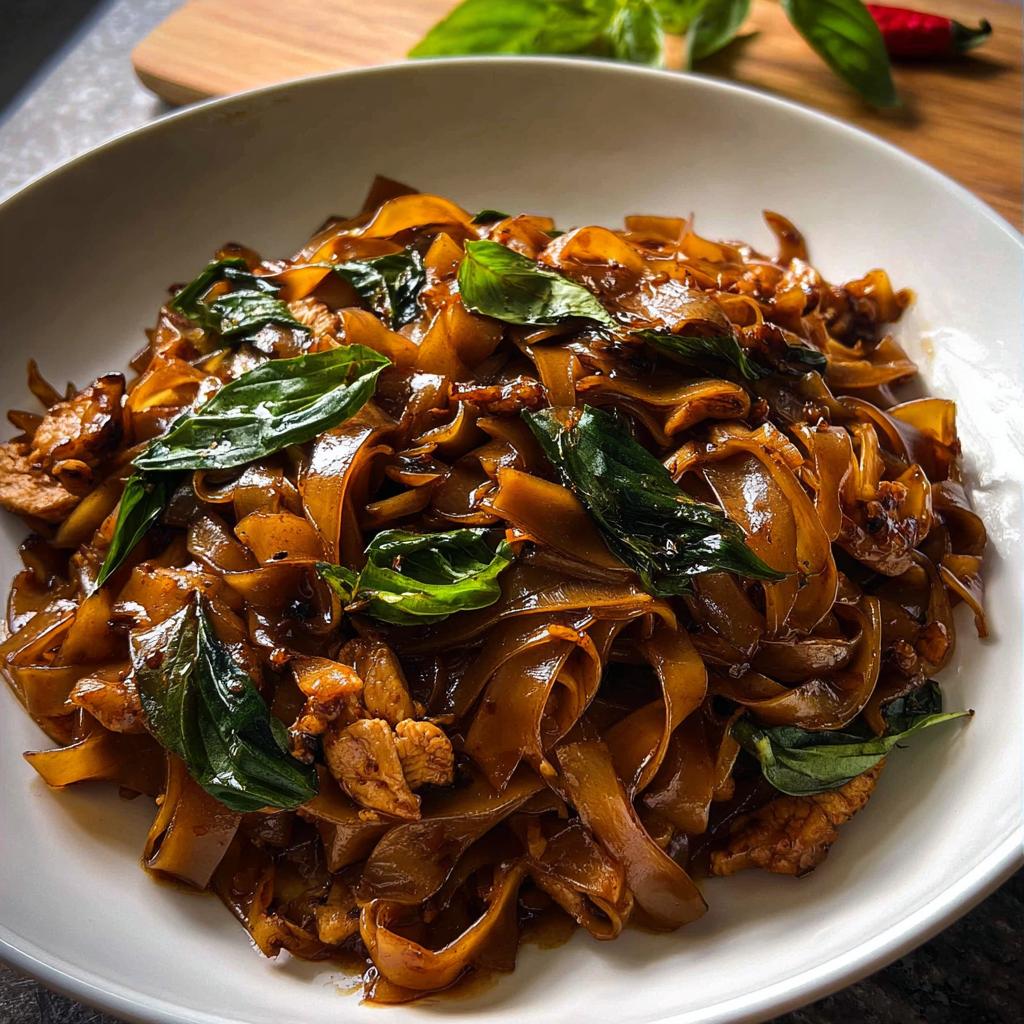
Street Style Thai Drunken Noodles
Ingredients
Equipment
Method
- Prepare noodles according to the directions on the packet.
- Mix all sauce ingredients together in a small bowl.
- Heat oil in a wok or large heavy based skillet over high heat.
- Add garlic and chilli and cook for 10 seconds.
- Add onion and cook for 1 minute.
- Add chicken and fish sauce, and fry until the chicken is cooked, about 2 minutes.
- Add green onion, noodles, and the prepared sauce. Cook for 1 minute until the sauce reduces and coats the noodles.
- Remove the wok from the heat and immediately add the basil. Toss until the basil is just wilted, then serve immediately.
Nutrition
Notes
Tried this recipe?
Let us know how it was!
Gluten-Free Culinary Storyteller & Recipe Heritage Specialist
Getting diagnosed with non-celiac gluten sensitivity in my late twenties felt like losing my Italian identity. Growing up in nonna’s Brooklyn kitchen, learning traditional techniques that suddenly became off-limits—I decided to fight for those family food traditions instead of giving up.
With my food journalism background and European baking training, I became obsessed with recreating authentic flavors in gluten-free formats. I’ve adapted 400+ traditional recipes from various cultures, with my gnocchi recipe winning “Recipe of the Year” from the National Gluten-Free Living Awards in 2022.
I collaborate with the Italian-American Cultural Center to document traditional family recipes and volunteer with the Westchester Celiac Support Group, teaching monthly pasta-making classes.
Food is the heart of family storytelling. No one should sacrifice their cultural heritage due to dietary restrictions.