
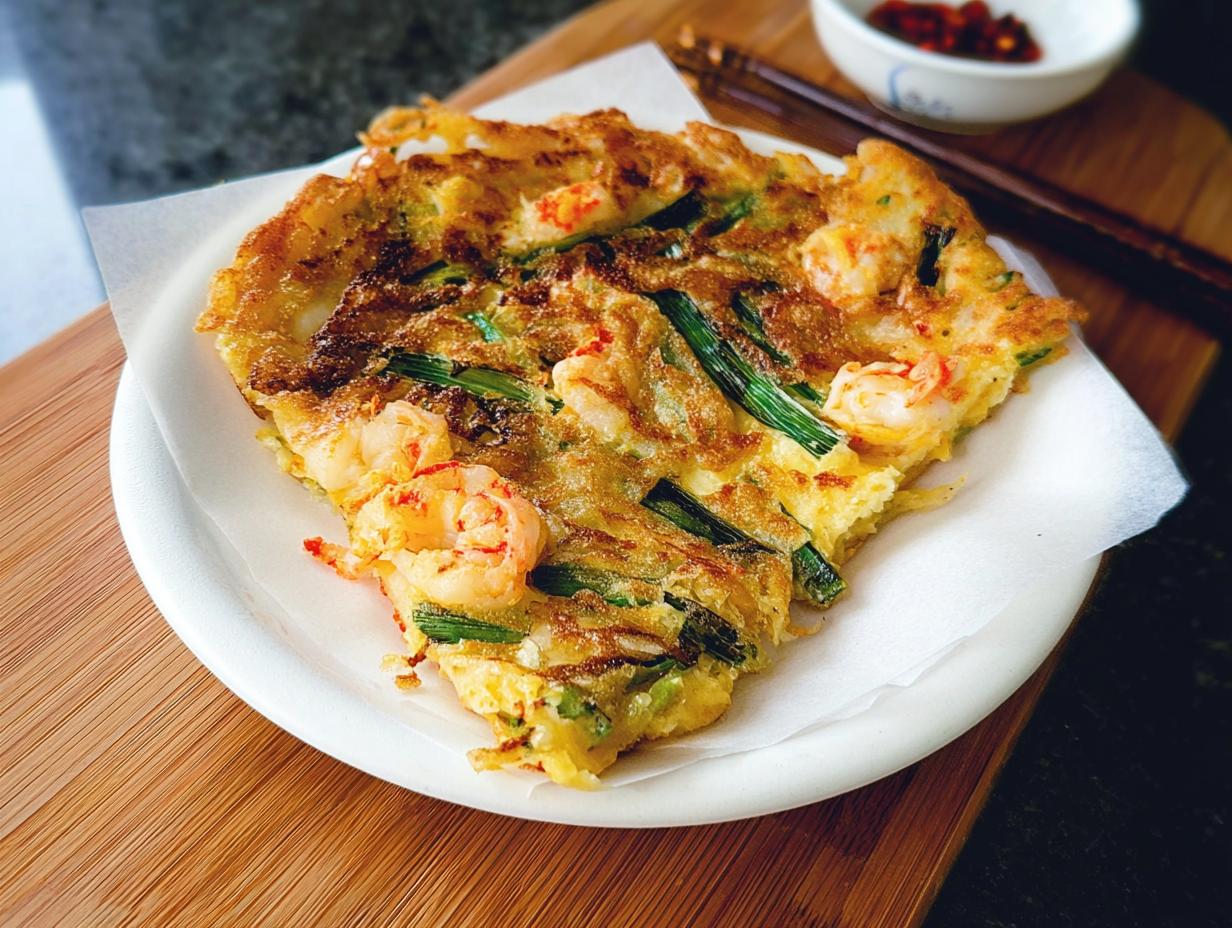
Trying to get a fun, flavorful meal on the table when life is chaos can feel impossible, right? That’s why I’m so excited to share one of our absolute favorites: a savory, crispy, and totally family-approved recipe for Korean Pancakes (Pajeon). Honestly, these come together faster than takeout!
The first time I made Korean Pancakes (Pajeon) was during a bustling weekend when my kids were craving something fun and different for dinner. I was flipping through a cookbook and stumbled upon a colorful picture of these savory pancakes. It instantly reminded me of the vibrant street food I enjoyed during my travels. I gathered all the ingredients from my pantry, including a gluten-free flour blend, and we mixed, poured, and flipped together. The kitchen was filled with laughter and the delightful aroma of green onions cooking. Seeing my kids take their first bites, their eyes lighting up with delight, made me realize the power of a simple dish—bonding over food can create wonderful memories, even on the busiest nights.
I’ve perfected this version to be wonderfully crispy and easy to adapt if you need gluten-free options, which is key for my family planning expertise. Trust me, you are going to love pulling these golden beauties out of the pan!
By Sophie Williams Gluten-Free Nutritionist & Family Meal Planning Expert
Why This Korean Pancakes (Pajeon) Recipe is a Weeknight Winner
When you’re juggling school runs, homework, and everything else, you need dinners that deliver big flavor without demanding all night in the kitchen. That’s exactly what these savory pancakes do! As a family meal planner, I love recipes that don’t stress people out, and this one is a winner because it truly is just 25 minutes from start to finish.
We focus on fun, flavorful bonding over the stovetop. And yes, even though the core recipe uses plain flour, it’s built on a foundation that makes those gluten-free swaps a breeze, which is something I preach about constantly in my work!
- Total time under half an hour—we’re talking fast food made healthy at home!
- The process involves active participation, making it perfect for getting kids involved in dinner prep.
- Simple ingredients mean you likely have everything on hand already.
I think that’s what makes them so special; they check every box for a busy family.
Quick Prep and Cook Time for Korean Pancakes (Pajeon)
Seriously, look at that timing! We need just 15 minutes for prep. That means chopping the green onions and mixing up four simple dry seasonings. The actual cooking time is only about 10 minutes total, split between the two pancakes we make.
You don’t have to wait until the weekend for something delicious and exciting. If you want more quick meal ideas you can rely on, you should definitely check out my guide on easy dinner recipes for meal prep. Twenty-five minutes, people! That’s faster than ordering delivery.
Gathering Ingredients for Perfect Korean Pancakes (Pajeon)
Okay, let’s talk ingredients because the difference between a soggy pancake and a crispy delight is all in the details here. We break this down into two easy groups: what you need for that light, airy batter, and what we’re packing inside for flavor.
For the batter, everything needs to be measured precisely, especially the water. Trust me on this one—use something really cold. Icy cold or even sparkling water makes the batter wonderfully light and helps those pancakes crisp up beautifully when they hit the hot oil. You’ll see the magic happen!
If you’re looking to simplify your grocery run even further, I have a post about building flavor with just 20 ingredients that might inspire you for future nights, but for now, let’s get organized!
For the Pancake Batter
Keep these components together and whisk them up well. The jug step is a small trick I picked up to make pouring thin streams much easier later on!
- 1 cup plain flour
- 1 Tbsp cornstarch
- 1 1/8 tsp fine salt
- 1 1/8 tsp garlic powder
- 1 1/8 tsp onion powder
- 1 cup water – and this must be icy cold or quality sparkling water!
For the Korean Pancakes (Pajeon) Fillings and Cooking
This is where the savory action is! Make sure you prep your seafood—nobody wants large, chewy bits in their pancake! I like to use rice bran oil because it has a high smoke point, which is essential for that high-heat crust. If you don’t have it, any neutral high-heat oil will work, but I really advocate for the rice bran oil here.
- 12 green onion tops (the green part only), cleaned and cut lengthways
- 100g calamari, cleaned and cut into little finger sized pieces
- 100g prawns, cleaned and cut into smaller pieces
- A few sprinkles of ground black pepper to marinate the seafood
- 1 beaten egg (we only drizzle half over the pancake as it cooks)
- 1 red chili, optional, thinly diagonally sliced for a kick
- 6 Tbsp cooking oil (approx. 3 Tbsp per pancake—don’t be shy with the oil!)
Step-by-Step Instructions for Making Korean Pancakes (Pajeon)
This is the fun part where everything comes together! Since we are making two pancakes, remember that you’ll need to repeat the whole cooking process again for the second one. Have your plate ready for the finished product, and let’s get cooking! We are aiming for that signature crispy edge you see at the best Korean spots.
For more detailed breakdowns on mastering cooking techniques, you can check out my guide on how to make easy dinner recipes like a pro. But honestly, these pancakes are straightforward!
Mixing the Batter and Preparing the Pan
First things first: grab your medium bowl. We need to successfully whisk together the flour, cornstarch, salt, garlic powder, and onion powder. Once those dry bits are combined, slowly pour in that icy cold water while you keep whisking until it’s smooth. Don’t just mix; whisk it well! Then, transfer that finished batter into a measuring jug. This seriously makes pouring a thin, even circle so much easier later on, trust me.
Next, let’s prep the pan. You’ll use about three tablespoons of oil for the first pancake. Get that frying pan moderately hot and swirl the oil around so it coats the entire bottom surface. We need this pan hot! Wait until you see the oil shimmer a bit before you move on.
Cooking and Layering the Korean Pancakes (Pajeon)
Now listen up—this is crucial for crispiness. Reduce that heat down to medium-high just before pouring. Test the oil; if you drop a tiny bit of batter and it sizzles right away, you’re perfect! Pour just under half a cup of batter into your hot pan and spread it quickly and thinly. Immediately lay about 6 of your long green onion tops right onto that thin batter layer, making them parallel.
Drizzle a tiny bit more batter over and between the onions to hold them in place. Now, toss your prepped calamari, prawns, and any chili slices sparingly on top. Finally, take about half of that beaten egg and drizzle it gently over everything. While it cooks, remember to gently push and swirl the pancake around the pan with your spatula. This movement stops it from searing to one spot and helps circulate the oil underneath for an even crunch.
Flipping and Achieving Crispy Korean Pancakes (Pajeon)
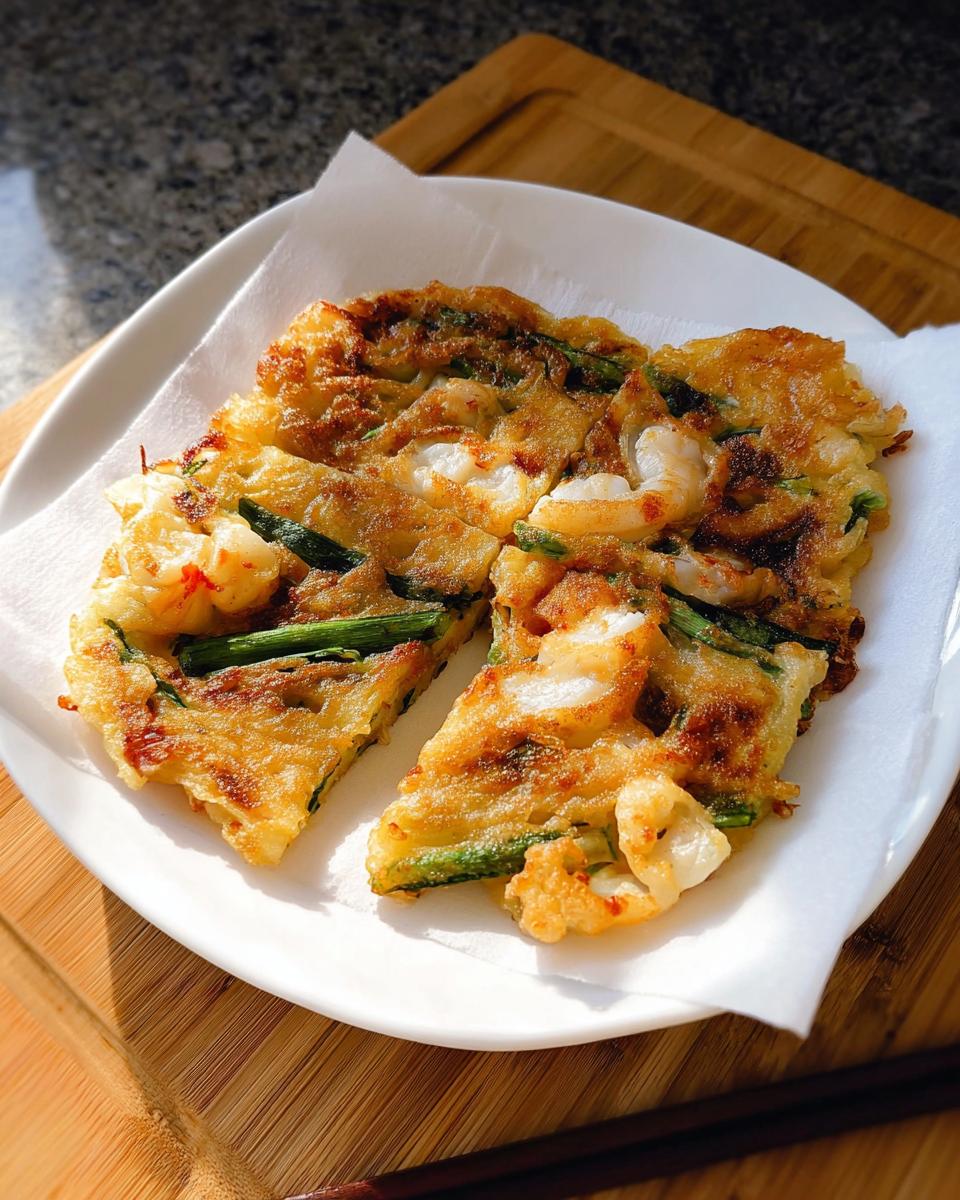
We are looking for about 4 minutes on the first side. You’ll know it’s ready to flip when the edges look set and the top is mostly opaque but still a little wet looking—that means the moisture inside is still working its magic.
When you flip, if it seems stuck at all, quickly—carefully!—drizzle just a smidge more oil around the edges. Once flipped, press down on the pancake with your spatula a couple of times. This pressing is what really forces those beautiful, thin edges to crisp up! Cook for another 3 to 4 minutes. Once done, slide it onto a cutting board. If you want to see another recipe that really focuses on deep-dive cooking techniques, check out this guide from an external source on haemul pajeon!
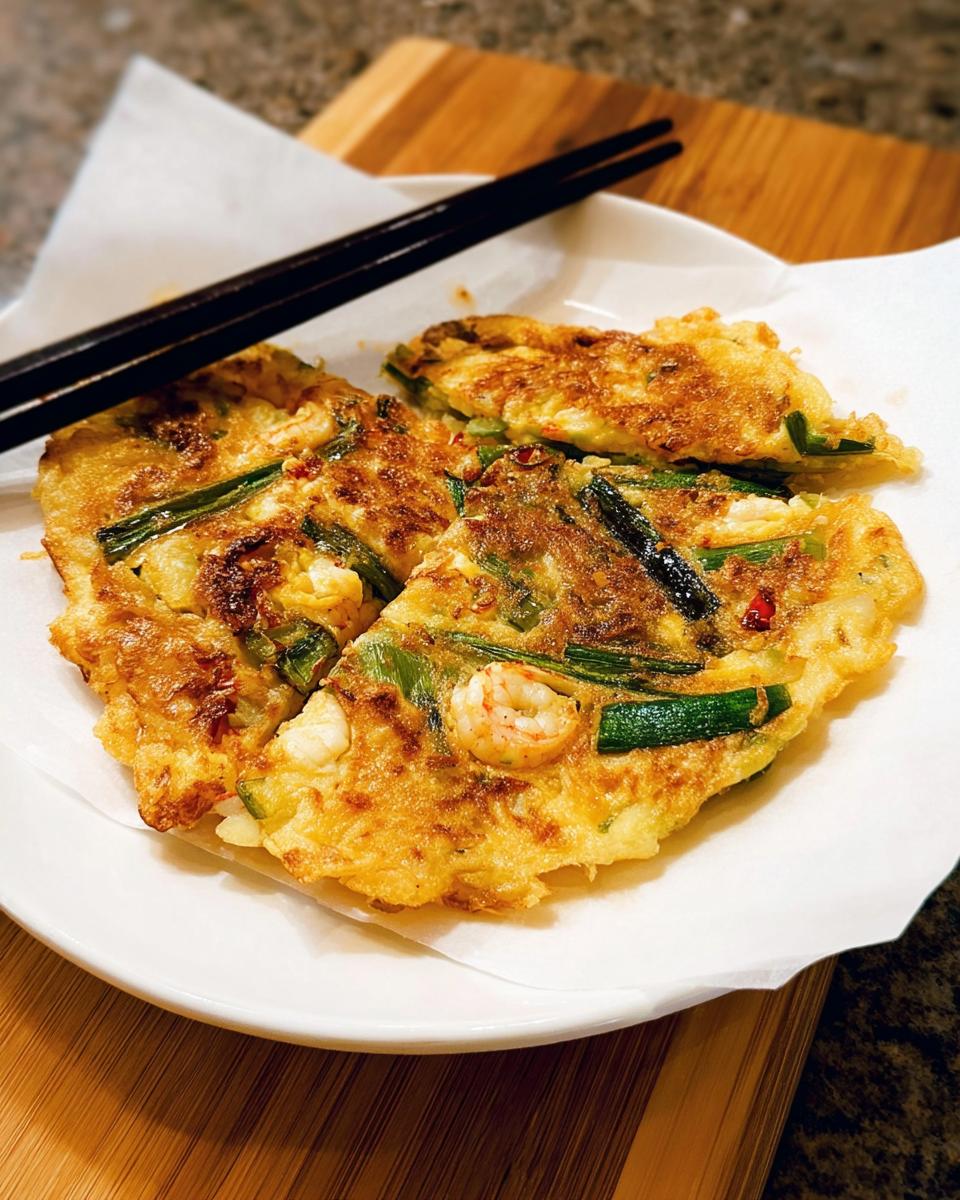
Slice it up and get ready for round two!
Tips for Achieving Restaurant-Quality Korean Pancakes (Pajeon)
You want that restaurant crunch, right? I promise you, it’s not luck; it’s totally technique! My biggest expert tip, which I learned from trial and error, is all about that batter consistency. Since we poured our batter into a jug, you can control the pour much better. Aim for thin coverage—too thick and it’ll be doughy, not crispy.
Also, that oil temperature has to be spot on. If the oil isn’t sizzling hot when the batter hits it, you’re essentially boiling the pancake instead of frying it. That’s the difference between golden brown and pale sadness!
And please, double-check your seafood. If the calamari or prawns smell “fishy” before you even add pepper, ditch them. Freshness matters immensely here.
If you ever try making this batch with a gluten-free flour blend instead of the plain flour, the same rules about super cold water and high heat still apply—don’t skip those steps! For more on technique mastery, feel free to look over my tips on how to make easy dinner recipes like a pro.
Ingredient Notes and Gluten-Free Substitutions for Korean Pancakes (Pajeon)
I know many of you are cooking gluten-free, and I want to make sure this recipe works perfectly for you! Now, the recipe I gave you calls for standard plain flour, but swapping that out is so incredibly simple. I always recommend using a good quality 1:1 gluten-free all-purpose blend if you need to keep things GF. You really won’t lose much texture at all, which is fantastic.
If you’re looking to skip the seafood entirely—maybe for a vegetarian night—don’t worry! You can easily bulk up the pancake with thinly sliced oyster mushrooms or firm tofu marinated in a little soy sauce and sesame oil. That keeps the flavor profile savory and delicious.
For more on making seamless swaps in the kitchen, check out my post on gluten-free baking to see how reliable these blends can be!
Serving Suggestions for Your Korean Pancakes (Pajeon)
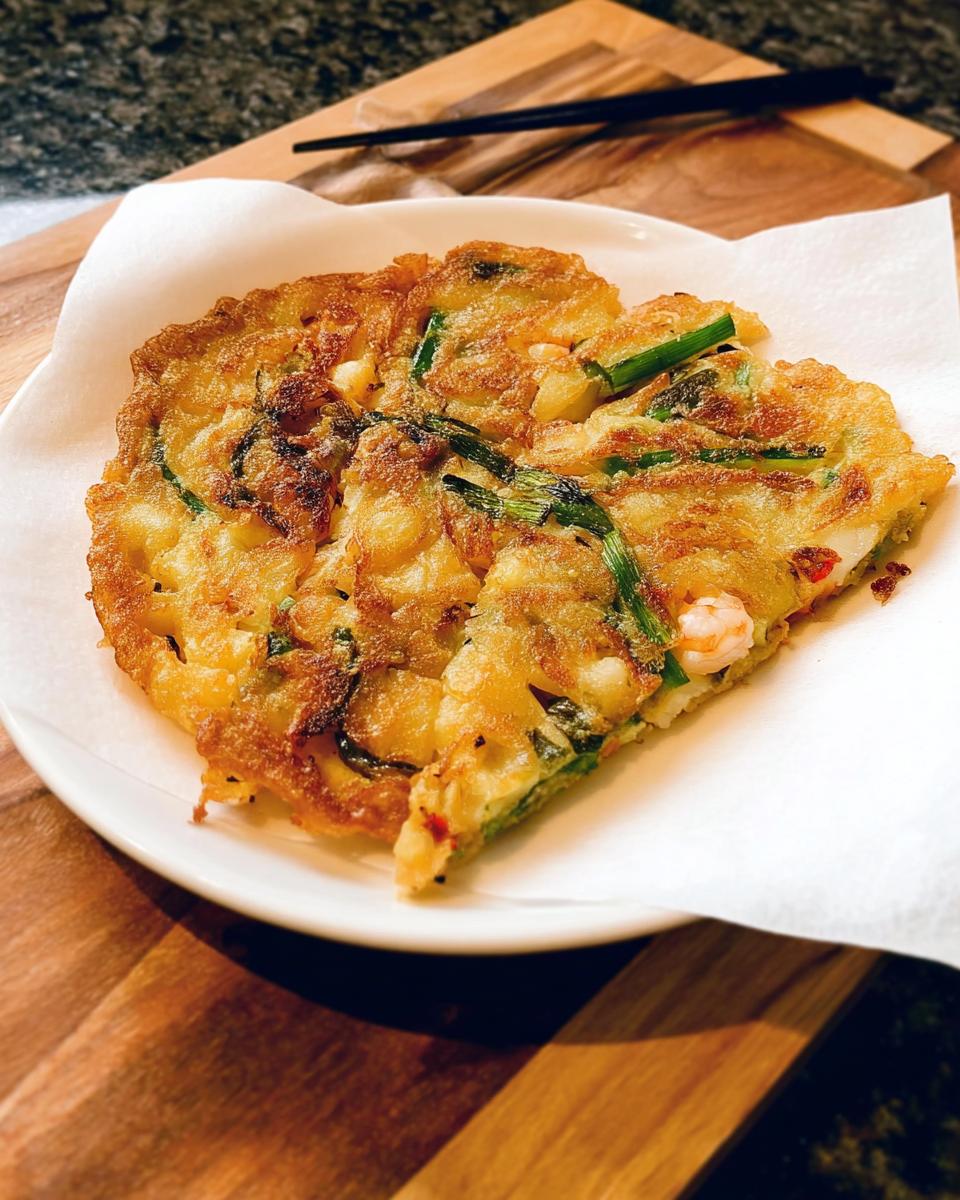
Cutting these beautiful, golden Korean Pancakes (Pajeon) into bite-sized pieces is tempting, but you absolutely *must* have the dipping sauce ready!
While the recipe doesn’t detail the sauce itself—it’s usually a simple mix of soy sauce, vinegar, and chili flakes—it is essential for bringing out that amazing savory seafood flavor. Don’t skip it!
To make this a complete, balanced weeknight dinner that my family loves, I often pair one pancake with a side of quick, fresh vegetables. I have a great guide on simple vegetable sides that works perfectly alongside these pancakes. It makes the whole meal feel less heavy and you get those extra nutrients in!
Storing Leftover Korean Pancakes (Pajeon)
We rarely have leftovers because the family devours them, but when we do, I have a strict policy: no microwaving! Seriously, the microwave turns that beautiful crispy crust into sad, floppy dough. Nope, not on my watch.
If you have any pancakes remaining, just stack them on a plate, cover that tightly with plastic wrap, or place them in an airtight container. They keep perfectly well in the fridge for about two days.
When you want to eat them again—and you will!—you need to reheat them in a dry, hot frying pan over medium heat. Just a few minutes per side brings back all that original golden crunch. For more advice on keeping your meals delicious for later, check out my tips for make-ahead meals!
Frequently Asked Questions About Korean Pancakes (Pajeon)
I always get so many questions after people try this recipe for the first time! It’s such a fun dish, and I want to make sure everyone gets that perfect, crisp texture we worked so hard for. Here are a few things I hear most often about making excellent Korean Pancakes (Pajeon).
If you’re looking for more general cooking help or just want to browse around my recipe vault, feel free to head over to my main recipes page!
Can I make Korean Pancakes (Pajeon) without seafood?
Absolutely, yes! You can easily make these vegetarian. If you skip the calamari and prawns, you need to bulk it up so it’s not just onion pancake. I love swapping in thinly sliced shiitake mushrooms or maybe some crumbled, pressed tofu. Just make sure whatever vegetable you add is thinly cut so it cooks through nicely in the small amount of time they are in the pan.
What is the secret to crispy Pajeon?
It comes down to two things that we talked about but are worth repeating because they are make-or-break! First, use icy cold water—or even better, sparkling water—in your batter. That temperature shock with the hot oil creates an immediate sizzle that leads to crispiness.
Second, don’t skimp on the oil, and make sure that oil is hot enough before the batter goes in! That high heat seals the outside fast, giving you that satisfying crunch you expect from great Green Onion Pancakes.
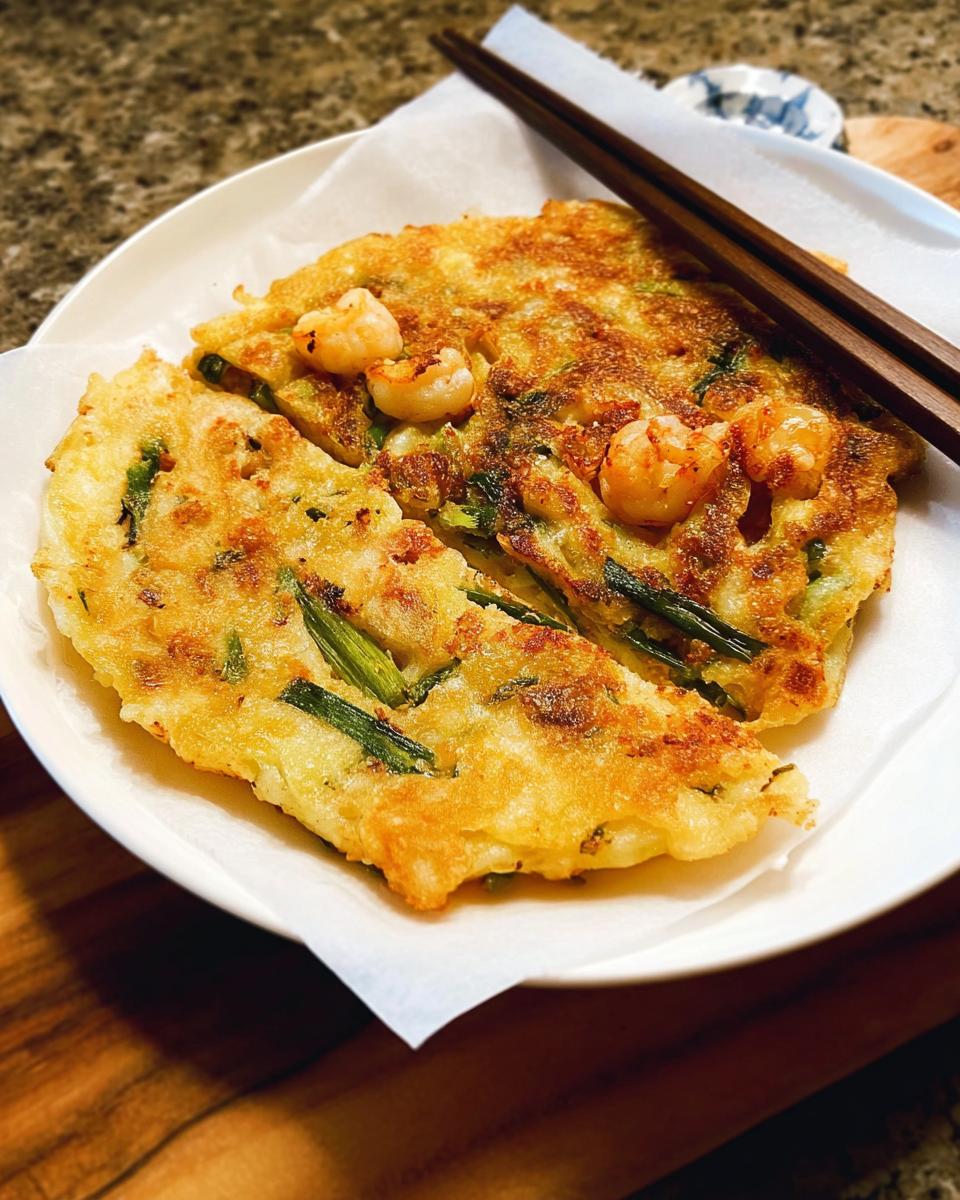
Estimated Nutritional Information for Korean Pancakes (Pajeon)
Now, I know some of you are also focused on making sure your fun family meals fit into your nutrition goals, and I totally get that! While this recipe wasn’t strictly designed to be a low-cal meal (hello, crispy fried goodness!), I always like to give you an idea of what you’re looking at.
Keep in mind these numbers are based on the total recipe yielding two full pancakes, so you’ll need to divide everything by the number of pieces you cut them into. These are just estimates, of course, since factors like how much oil you use when frying can change things!
But for the whole batch, you’re looking at:
- Calories: 783
- Fat: 46g
- Protein: 29g
- Carbohydrates: 62g
It’s a little higher in sodium because of the seasonings, but that flavor is worth it! If you want ideas on balancing out a savory meal like this with healthier additions, you must look at my favorite sides over on my guide to healthy meals and recipes. Enjoy it, and don’t stress too much over the numbers when you’re making memories!
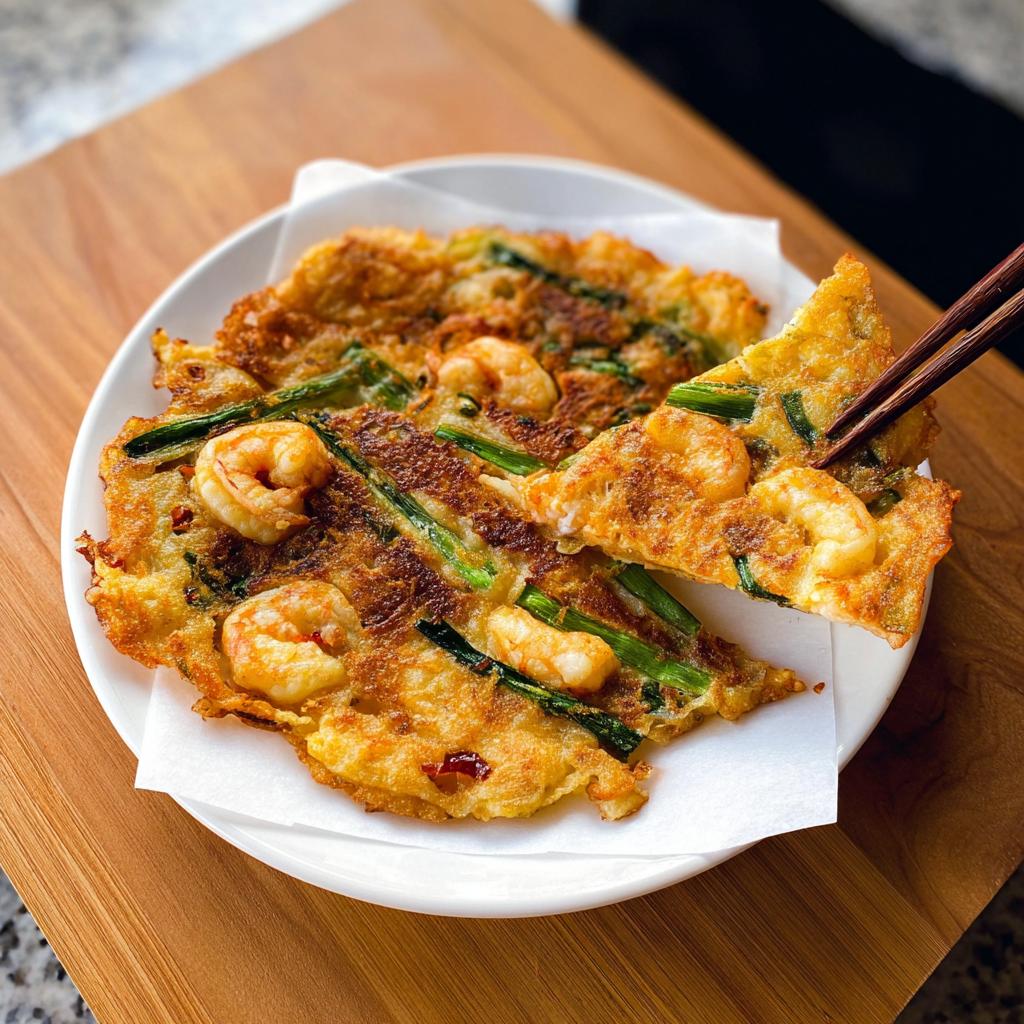
Korean Pancakes (Pajeon)
Ingredients
Equipment
Method
- Prepare a medium-sized bowl and add the flour, cornstarch, salt, garlic powder, onion powder, and icy cold water. Whisk well. Transfer the pancake batter to a measuring jug for easier pouring.
- Add approximately 3 tablespoons of cooking oil to a moderately heated frying pan, spreading it evenly around the pan. Increase the heat to high and preheat the pan until the bottom is well heated. Be cautious as the oil heats up.
- Wait about 1 minute until the oil is hot enough for cooking. Drop a small amount of pancake batter into the pan to check; if it sizzles, the oil is ready. Reduce the heat to medium-high. Pour just under half a cup of pancake batter into the pan and spread it evenly and thinly.
- Place 6 green onion tops on the pancake batter, parallel to each other. Pour a little batter over and between the green onions, filling the gaps. Reduce the heat to medium.
- Place some calamari, prawns, and red chilies (if using) sparingly over the green onions.
- Use a spoon to drizzle half of the beaten egg over the pancake. While cooking, gently move the pancake in a circular motion from time to time to prevent sticking.
- Flip the pancake when the top is partially cooked, which takes about 4 minutes. If needed, add more cooking oil around the edges of the pancake to help release it. Press the pancake with a spatula a couple of times to make it crispy. Cook for another 3 to 4 minutes. Turn off the heat and transfer the pancake onto a plate or cutting board.
- Repeat steps 2 to 7 with the remaining ingredients until everything is used up.
- Slice the pancake into bite-sized pieces. Serve it with Korean pancake sauce.
Nutrition
Notes
Tried this recipe?
Let us know how it was!
Gluten-Free Culinary Storyteller & Recipe Heritage Specialist
Getting diagnosed with non-celiac gluten sensitivity in my late twenties felt like losing my Italian identity. Growing up in nonna’s Brooklyn kitchen, learning traditional techniques that suddenly became off-limits—I decided to fight for those family food traditions instead of giving up.
With my food journalism background and European baking training, I became obsessed with recreating authentic flavors in gluten-free formats. I’ve adapted 400+ traditional recipes from various cultures, with my gnocchi recipe winning “Recipe of the Year” from the National Gluten-Free Living Awards in 2022.
I collaborate with the Italian-American Cultural Center to document traditional family recipes and volunteer with the Westchester Celiac Support Group, teaching monthly pasta-making classes.
Food is the heart of family storytelling. No one should sacrifice their cultural heritage due to dietary restrictions.