
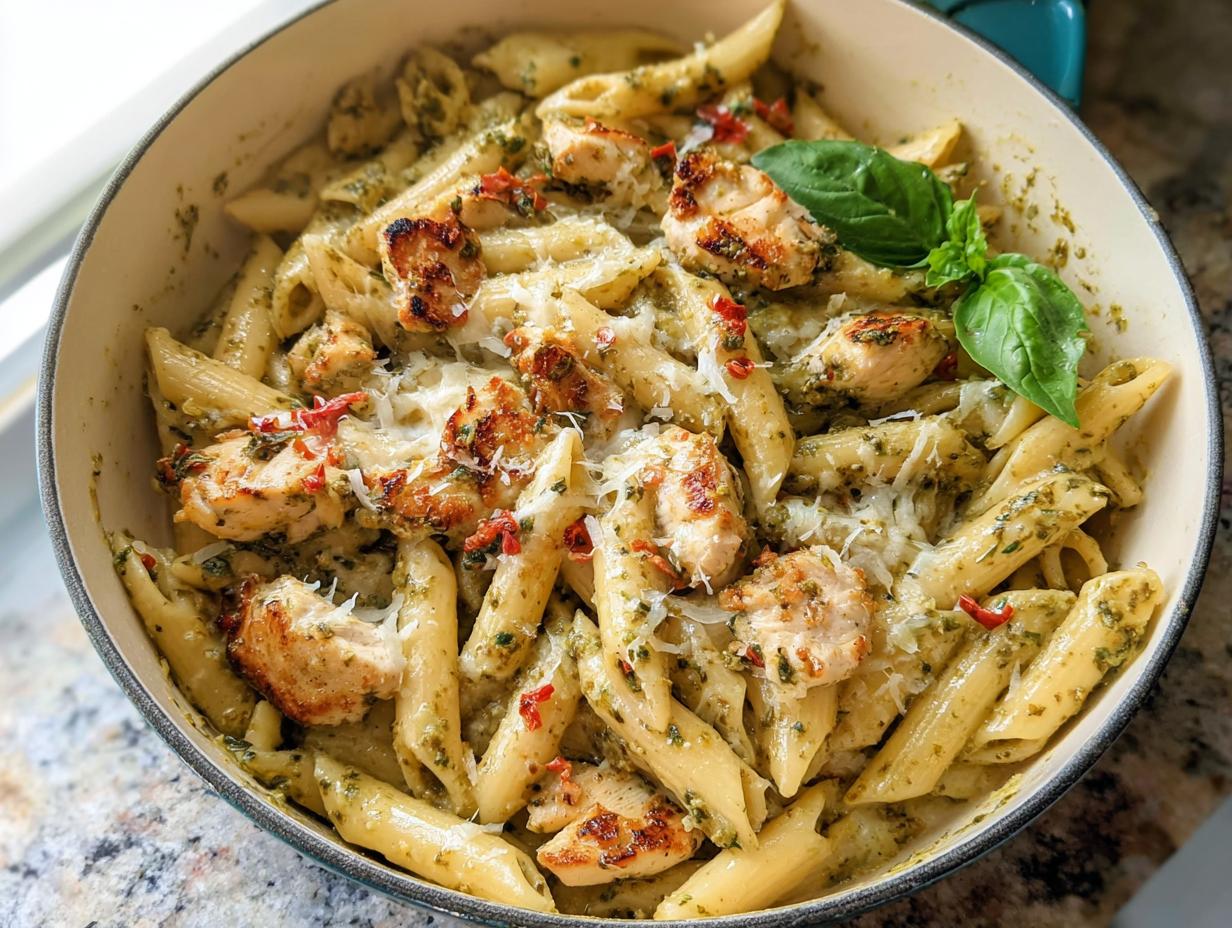
Oh, the smell! Just thinking about this Chicken Pesto Pasta makes my kitchen feel instantly warmer and more inviting. Honestly, after a long day, the last thing I want is some complicated meal. But I still crave something delicious, you know? That’s exactly how this recipe was born. It’s my go-to for a dinner that feels super fancy and tastes incredible, yet is so ridiculously easy to throw together. It’s become a staple for me, especially since it reminds me of how I love turning simple ingredients into something truly comforting.
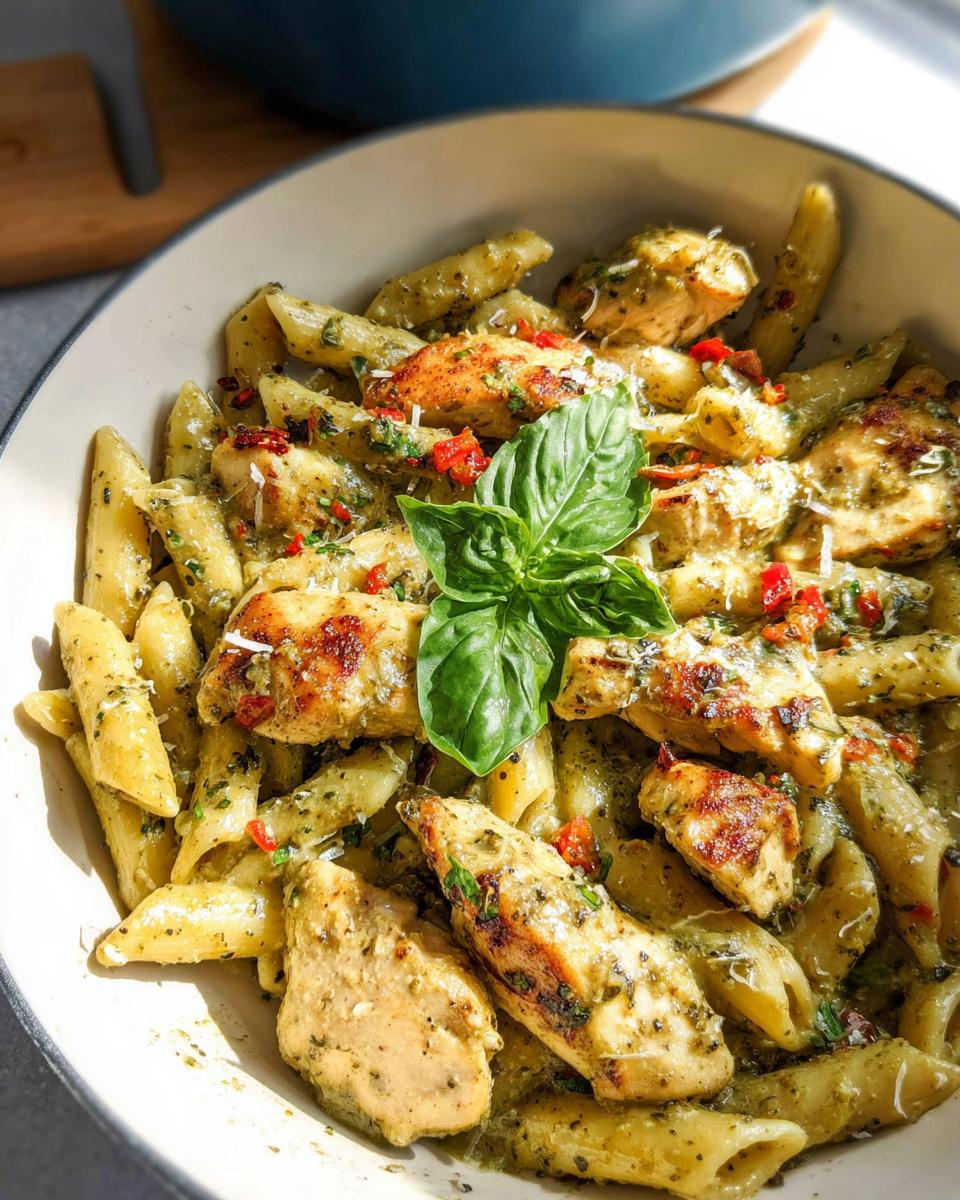
Why You’ll Love This Chicken Pesto Pasta
Trust me, you’re going to adore this recipe. Here’s why:
- Super Speedy: Seriously, dinners like this are a lifesaver on busy weeknights.
- Gourmet Flavor, Easy Steps: It tastes like something from a fancy Italian restaurant, but it’s so simple to whip up!
- Comfort Food Heaven: It’s hearty, creamy, and just plain delicious. Pure comfort in a bowl!
- Diet-Friendly Adaptable: While the recipe is written as is, it’s super easy to swap in gluten-free pasta if you need it, keeping that amazing Italian taste.
Ingredients for Your Perfect Chicken Pesto Pasta
Okay, here’s what you’ll need to grab to make this dreamy Chicken Pesto Pasta. Remember, using good quality ingredients really makes a difference here – especially your pesto and parmesan!
For the Chicken
- 1 pound boneless skinless chicken breasts, cut into 1-inch pieces
- 1 teaspoon Italian seasoning
- 1 pinch Kosher salt
- 1 pinch Black pepper
For the Pasta
- 8 ounces penne pasta, preferably with ridges
- 1 tablespoon salt (for boiling water)
For the Sauce
- 2 tablespoons extra virgin olive oil
- 1/2 cup heavy cream
- 1/4 cup parmesan cheese, plus more for serving
- 1/4 cup sun dried tomatoes, drained if packed in oil
- 1/2 cup basil pesto, homemade or quality store-bought, plus more if you like
- 1/2 to 1 teaspoon red pepper flakes
- 1 handful basil leaves, torn, for garnish
And hey, if you’re keeping this gluten-free, just swap out the standard penne for your favorite gluten-free pasta! It works like a charm and you won’t miss a thing.
How to Make Delicious Chicken Pesto Pasta
Alright, let’s get this amazing Chicken Pesto Pasta on your table! It’s really as simple as following a few easy steps. Don’t be intimidated by the gorgeous look of it; we’re just going to combine some yummy ingredients.
Preparing the Chicken for Your Chicken Pesto Pasta
First thing’s first, let’s get that chicken ready. Just toss your cut chicken pieces with the Italian seasoning, a good pinch of salt, and some pepper. Then, heat up two tablespoons of THAT good extra virgin olive oil in your skillet over medium-high heat. Drop the chicken in and let it get nice and golden brown on all sides, cooked all the way through. That should take about 7 or 8 minutes. Easy peasy!
Cooking the Pasta to Perfection
While the chicken is doing its thing, get a big pot of water boiling for your pasta. And don’t be shy with the salt – make it taste like the sea! This is where you get that lovely flavor into the pasta itself. Cook your penne until it’s *al dente*, meaning it still has a little bite to it. Before you drain it, make sure to scoop out about a cup of that starchy cooking water. That stuff is liquid gold for making your sauce extra creamy!
Creating the Creamy Pesto Sauce
Now for the magic! Drain your pasta (remembering that reserved water!). Turn the heat under your chicken skillet down to low. Toss in the cooked pasta, that luscious heavy cream, the grated parmesan, and those little bursts of flavor from the sun-dried tomatoes. Give it all a good stir until it’s wonderfully coated. If it looks a little thick, just splash in a bit of that reserved pasta water, a tablespoon or two at a time, until it’s just glossy and dreamy. This is where you really bring your Chicken Pesto Pasta to life!
Finishing Touches for Your Chicken Pesto Pasta
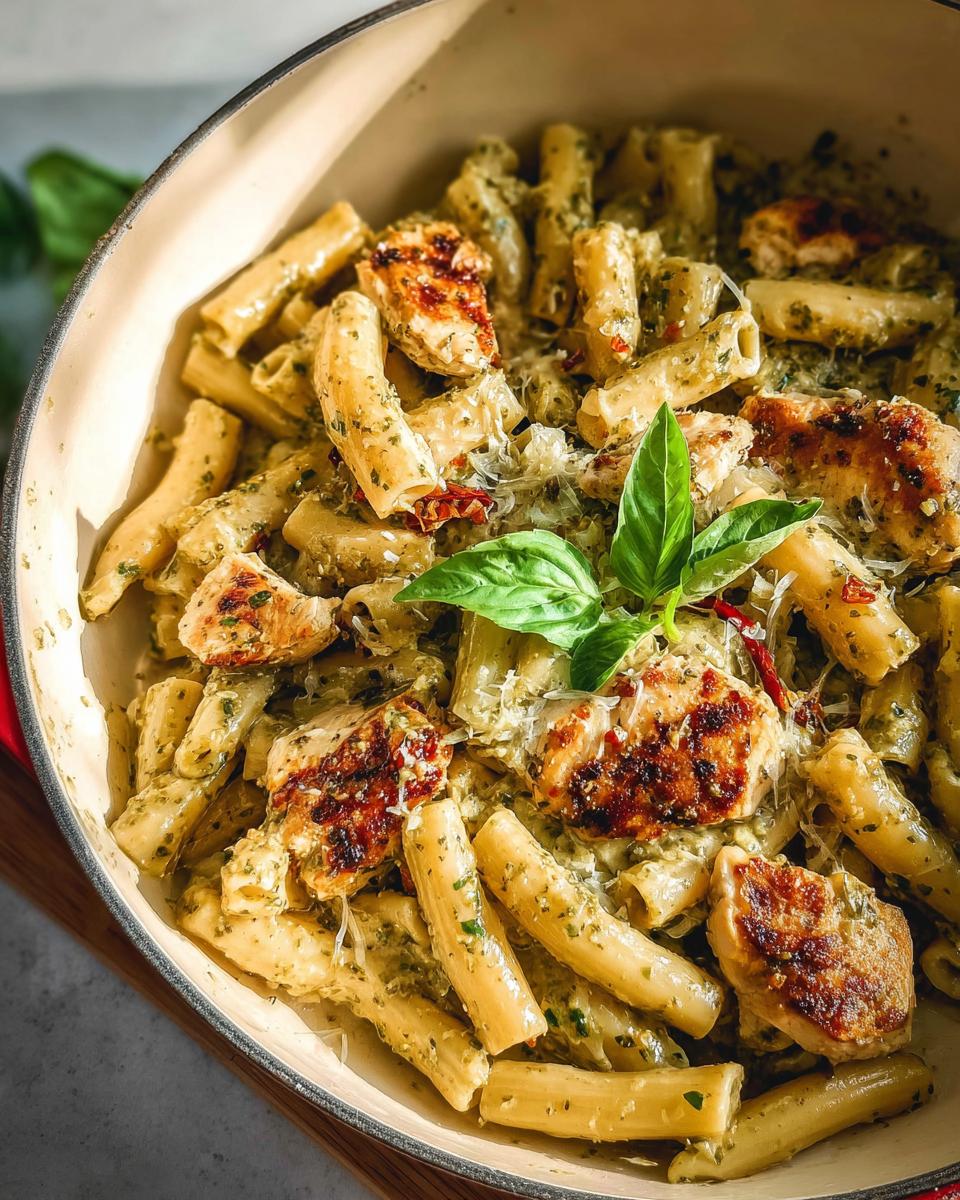
Here’s the grand finale for your spectacular Chicken Pesto Pasta! Take the pan completely off the heat. Add in your beautiful basil pesto and stir it all together. You want to do this off the heat so the pesto stays super fresh and vibrant. Finish it off with another sprinkle of parmesan, those little red pepper flakes for a hint of warmth if you like, and a tear of fresh basil. That’s it!”
Tips for the Best Chicken Pesto Pasta
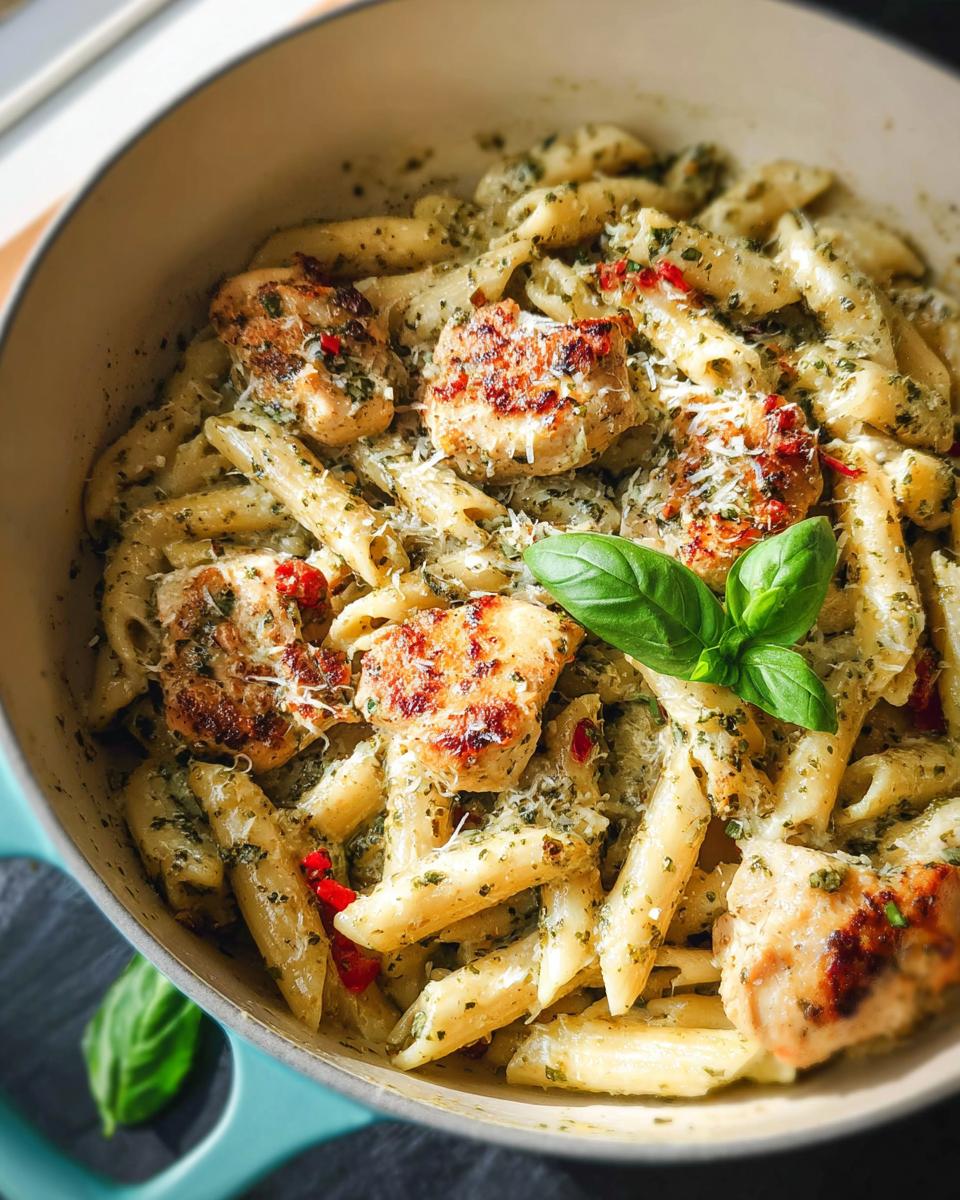
Making a truly fantastic Chicken Pesto Pasta is all about a few little tricks that make a big difference. First off, if you can, use really good quality pesto! Fresh basil makes a world of difference. Also, don’t dare overcook your pasta – nobody likes mushy pasta, right? Always cook it just until it has a slight bite left, what we call *al dente*. And remember that pasta water I told you to save? It’s your best friend for getting that sauce just right, making it creamy and clingy without feeling heavy. Finally, always taste and adjust your seasonings right at the end. Sometimes your parmesan is saltier, or maybe you want a bit more kick from the red pepper flakes. Trust your taste buds!
Ingredient Notes and Substitutions
Let’s talk ingredients for a sec, because they really make this dish sing! For the pesto, I’m a huge fan of using a really good quality store-bought one if I’m in a rush, but if you have fresh basil hanging around, homemade pesto takes it to a whole new level. Seriously, if you have the time, give it a whirl!
Parmesan cheese is key here, and I always go for the real stuff, grated from a block. It just melts so much better. As for the pasta, penne is great because those ridges grab all the yummy sauce, but feel free to use rotini, fusilli, or even linguine if that’s what you have. And if you don’t have olive oil, a good quality avocado oil works just fine too!
Frequently Asked Questions About Chicken Pesto Pasta
Got questions about whipping up this amazing dish? I’ve got you covered!
Can I make this Chicken Pesto Pasta ahead of time?
You can totally make this ahead! Cook the chicken and pasta separately and store them in the fridge. When you’re ready to eat, just reheat the chicken and pasta gently in a skillet with a splash of cream or pasta water, then stir in the pesto and cheese. It’s still a super quick meal!
What kind of pesto is best for this Chicken Pesto Pasta?
Honestly, any good quality basil pesto will work wonders! I love using a really fresh, vibrant one with lots of basil and good olive oil. If you’re feeling ambitious, homemade pesto is incredible, but a good store-bought version is totally fine for a fast dinner. The key is flavor!
How can I make this a gluten-free Chicken Pesto Pasta?
Making this pasta recipe gluten-free is a breeze! Simply swap out the regular penne for your favorite gluten-free pasta. Most gluten-free pastas cook up beautifully and hold the sauce just as well. Just double-check that your pesto and parmesan cheese are also certified gluten-free if needed.
Nutritional Information for Chicken Pesto Pasta
So, you’re probably wondering about the nitty-gritty, right? Here’s a general idea of what you’re getting with a serving of this delightful pasta. These numbers are based on the ingredients listed and can change a bit depending on exactly what brands you use or any little tweaks you might make. Consider these your friendly ballpark figures!
- Calories: 444.6
- Carbohydrates: 33.4 g
- Protein: 24.7 g
- Fat: 23.3 g
- Saturated Fat: 7.8 g
- Cholesterol: 75.3 mg
- Sodium: 363.1 mg
- Potassium: 551.4 mg
- Fiber: 2.3 g
- Sugar: 4 g
- Vitamin A: 858.6 IU
- Vitamin C: 2.8 mg
- Calcium: 118.4 mg
- Iron: 1.5 mg
Remember, these are just estimates, but they give you a good idea of the goodness packed into this meal!
Share Your Chicken Pesto Pasta Creation!
Alright, fellow home cooks, I just LOVE hearing from you! Did you whip up this Chicken Pesto Pasta? How did it turn out? Did you add your own little twist? Please, please share your thoughts in the comments below – I read every single one! And if you’re feeling fancy, snap a pic and tag me on social media. Seeing your creations is the absolute best part of this whole journey. You can always find more easy pasta recipes and kitchen stories over on my About page!
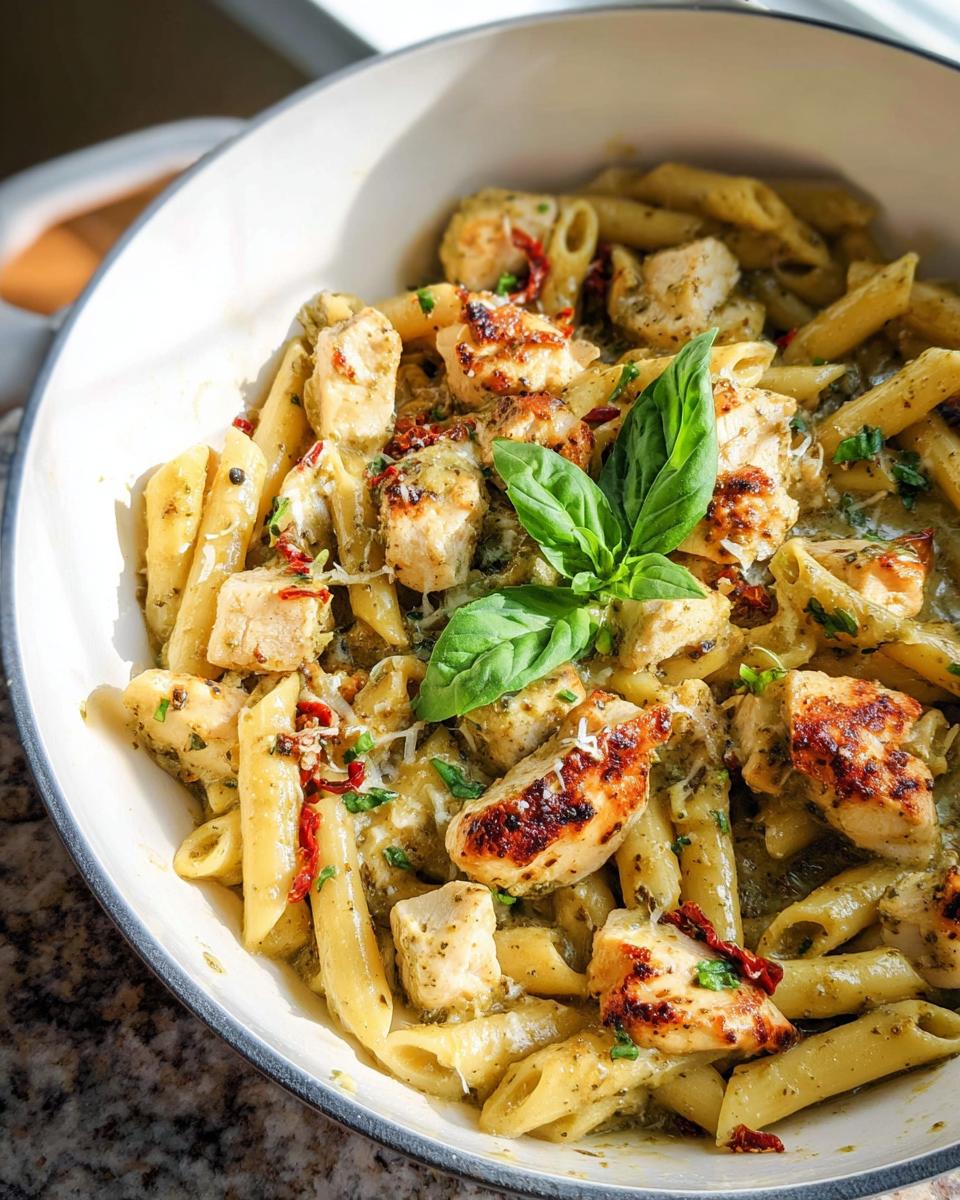
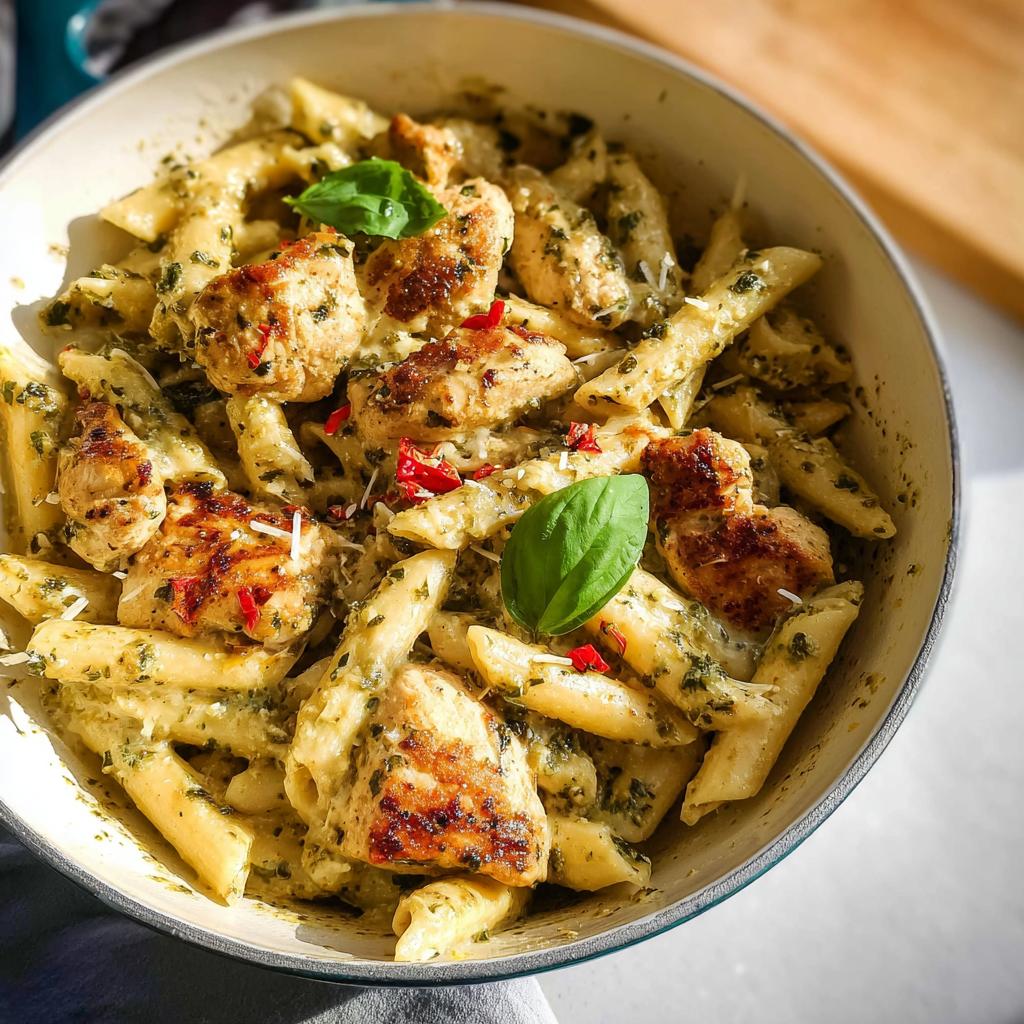
Chicken Pesto Pasta
Ingredients
Equipment
Method
- Season the chicken. Add the chicken to a bowl and season with the Italian seasoning and a big pinch each of kosher salt and black pepper. Toss to coat.
- Cook the pasta. Bring a medium pot of water to a boil and salt it well with about 1 tablespoon of salt. Drop the pasta in the boiling water and cook until al dente according to package instructions (about 8 to 9 minutes).
- Cook the chicken. While the pasta is cooking, add the olive oil to a large non-stick skillet and heat over medium-high. Add the chicken and cook, tossing occasionally, until golden brown on the outside and cooked through, about 7 to 8 minutes.
- Drain the pasta. When the pasta is ready, reserve about 1 cup of the cooking water and drain.
- Combine. To the pan with the chicken, lower the heat and stir in the cooked pasta, heavy cream, parmesan, and sundried tomatoes. Stir until everything is well combined. If it looks a bit dry, add a splash of the pasta cooking water (a couple tablespoons at a time) until the pasta is glossy and coated in the creamy sauce.
- Add the pesto. Turn off the heat and take the pan off the burner. Stir in the basil pesto and finish with a sprinkle of grated parmesan, red pepper flakes, and basil leaves. Serve.
Nutrition
Notes
Tried this recipe?
Let us know how it was!
Gluten-Free Nutritionist & Family Meal Planning Expert
Working as a pediatric dietitian at Children’s Hospital of Denver, I kept meeting families overwhelmed by managing their children’s celiac disease. Parents stressed, kids frustrated, everyone eating bland boxed “gluten-free” products.
That’s when I realized my calling: creating practical, balanced gluten-free solutions for real families with busy schedules. I’ve developed 375+ family-friendly recipes focusing on lunch boxes, after-school snacks, and make-ahead dinners that actually work.
My meal planning system was featured in Parents Magazine, and I presented research at the Rocky Mountain Pediatric Nutrition Conference. My evidence-based approach ensures recipes meet both taste and health standards—families need solutions that work in the real world, not just perfect test kitchens.